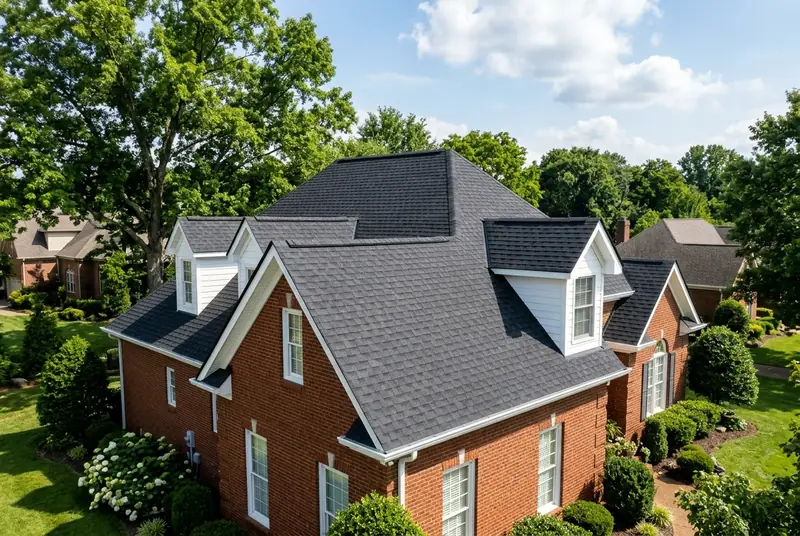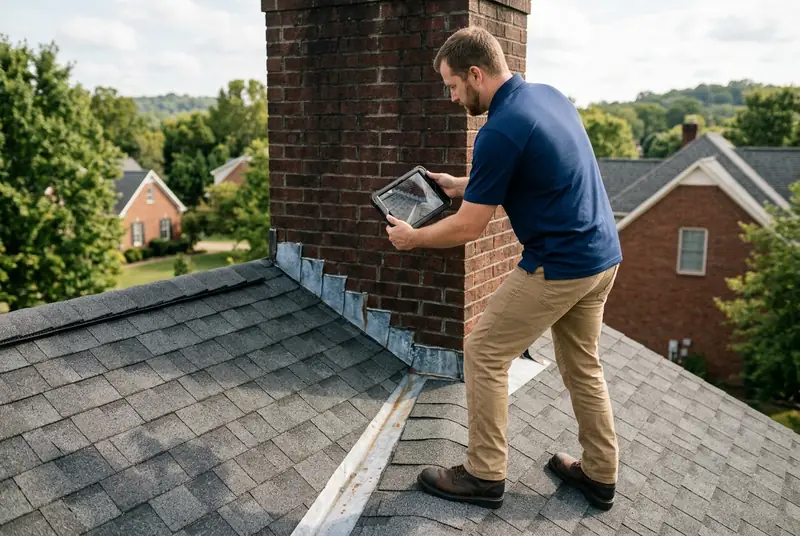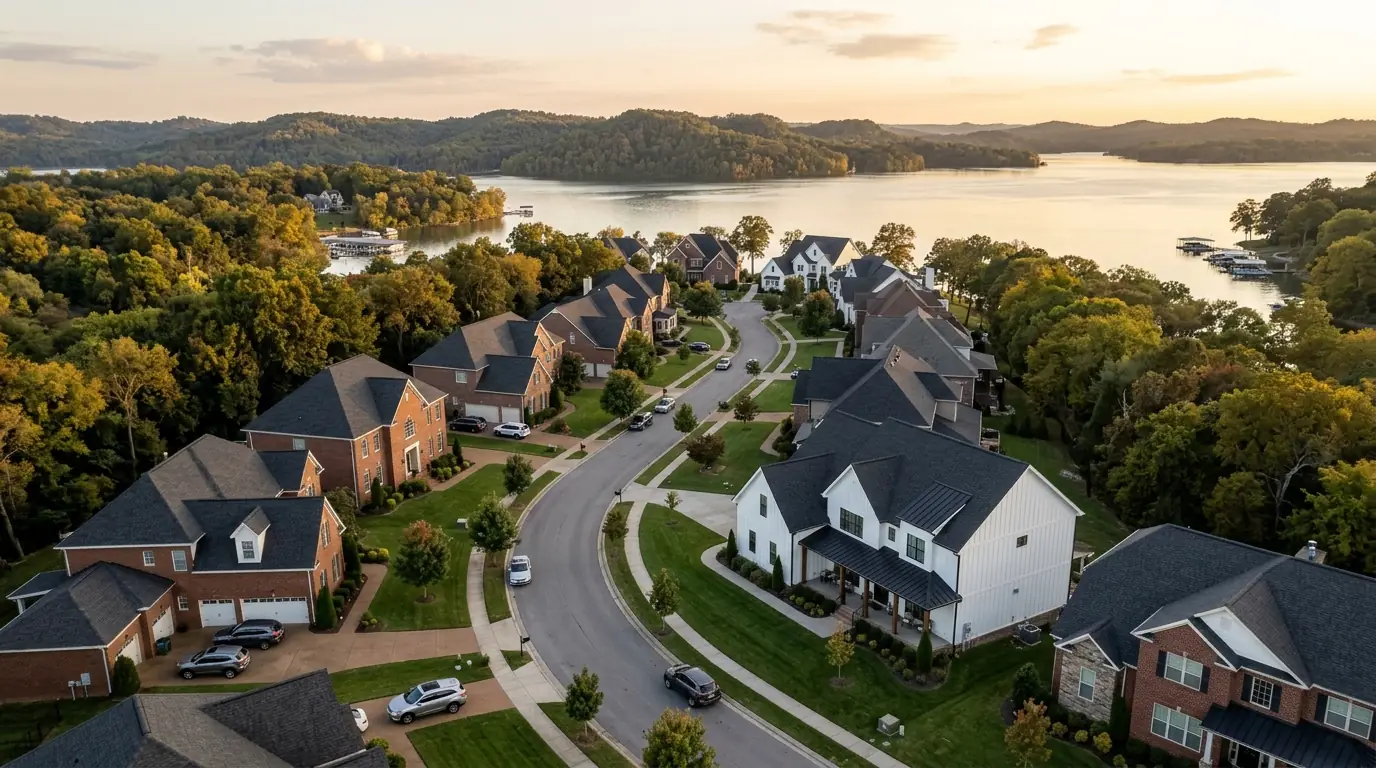
Lake wind, humidity and moss are tough on waterfront roofs. Learn which fasteners, shingles and vents suit Old Hickory Lake homes. Ask us: (615) 647-8320.
Living along Old Hickory Lake in Hendersonville, Gallatin, or surrounding Sumner County shoreline communities offers magnificent waterfront vistas and immediate recreational access. However, waterfront properties face unique environmental microclimates that place severe physical demands on residential roofing systems. The combination of unobstructed lake wind fetch, persistent humidity vapor, dense tree shading, and aggressive biological growth requires specialized roofing materials, fastening schedules, and flashing details to ensure long-term structural integrity.
The Lake Wind Fetch Effect & 115 MPH Wind Uplift Pressures
Old Hickory Lake is a massive Cumberland River reservoir spanning over 22,500 acres of open water with 440 miles of shoreline. For waterfront homes, open water creates a critical meteorological phenomenon known as unobstructed wind fetch:
- Accelerated Wind Velocity: In inland suburban neighborhoods, friction created by houses, fences, and terrain contours slows down approaching surface winds. On waterfront parcels, severe thunderstorm downdrafts and winter gales travel miles across open water without resistance, striking lake-facing roof slopes at maximum velocity.
- ASCE 7 Basic Design Wind Speed (115 MPH): Sumner County building codes enforce a basic design wind speed of 115 mph. On lakefront elevations, localized wind pressures along eaves, rakes, and ridge peaks can exceed standard inland engineering assumptions.
- Mandatory 6-Nail Fastening Schedule: Standard 4-nail shingle fastening is inadequate for lakefront homes. Architectural shingles on waterfront residences should always be secured using a dedicated 6-nail high-wind pattern utilizing corrosion-resistant 1-1/4" to 1-1/2" electro-galvanized or stainless steel ring-shank nails placed precisely through the double-thick shingle nailing zone.
- Enhanced Starter Shingle Strip: Installing a factory-manufactured starter course with continuous thermal sealant along all eave and rake edges locks the perimeter down, preventing wind from getting beneath the shingle overhang and initiating progressive shingle peel.
High Waterfront Humidity and Biological Colonization
Waterfront microclimates generate elevated ambient humidity and morning fog banks that linger over shoreline properties. This persistent moisture accelerates biological growth:
| Biological Hazard | Underlying Causation | Engineered Protective Solution |
|---|---|---|
| Gloeocapsa Magma Cyanobacteria | High lakeside humidity fosters airborne cyanobacteria that feeds on shingle limestone filler | Install algae-resistant shingles featuring high concentrations of copper and zinc granules |
| Dense Moss and Lichen Colonies | Heavy tree shade along shoreline prevents morning dew evaporation; moss roots penetrate shingle tabs | Trim tree canopy to maintain 10-foot clearance; install sacrificial zinc ridge strips beneath ridge caps |
| Accelerated Fastener Corrosion | Persistent fog and moisture vapor accelerate galvanic rusting on standard electro-plated nails | Specify hot-dipped galvanized or 304 stainless steel ring-shank roofing nails for all slopes |
| Attic Vapor Condensation | Warm lake humidity migrates into attics; cold winter decking causes frost and wood sheathing decay | Engineer continuous balanced 50/50 soffit-to-ridge ventilation with baffle airflow channels |
Lakefront Gutter Sizing and Soil Erosion Management
Waterfront residences frequently feature large architectural footprints with steep gables that collect massive volumes of stormwater during intense summer cloudbursts:
- Upgrading to 6-Inch Seamless Gutters: Standard 5-inch residential gutters frequently overflow during 2-inch-per-hour Middle Tennessee downpours. Waterfront homes require oversized 6-inch seamless aluminum gutters paired with 3x4-inch commercial downspouts to handle rapid drainage volume.
- Protecting Lakeside Slopes and Retaining Walls: Downspouts discharging directly at the foundation can saturate clay soils, causing foundation settling or triggering lakeside slope slippage. Downspouts must be piped into buried PVC solid drain lines that route water safely to rip-rap splash pads or permitted shoreline discharge points.
- Commercial Gutter Apron Flashing: Installing wide metal gutter aprons beneath the lower starter shingle course ensures water flows directly into the gutter trough without wicking behind the gutter against wooden sub-fascia boards.
Corrosion-Resistant Metal Detailing for Lakefront Roofs
Flashings, drip edges, and valley linings on waterfront homes are exposed to continuous dampness that can trigger premature corrosion if low-grade materials are installed:
- Heavy-Gauge Aluminum or Painted Steel Drip Edge: Standard thin galvanized drip edge metal quickly develops chalking and white rust in waterfront settings. Specify heavy .032" Kynar 500 pre-painted aluminum or G-90 hot-dipped galvanized steel with factory-baked enamel coatings.
- Closed-Cut or Metal Valleys: Open metal valleys along lakefront slopes must be fabricated using heavy-gauge pre-finished steel or copper underlaid by full-width high-temperature self-adhering ice and water barrier membranes.
- Stainless Steel Fasteners on Metal Roofing: If installing standing-seam metal roofing on a lakefront property, concealed clips and structural screws should be 300-series stainless steel to prevent galvanic corrosion between dissimilar metals.
- Boat House and Dock Roofing Guidelines: Many Old Hickory Lake properties feature covered boat slips or shoreline boat houses governed by U.S. Army Corps of Engineers Shoreline Management permits. These structures experience intense water reflection and constant wave moisture, making heavy 24-gauge standing seam metal panels with marine-grade fasteners the gold standard for dock roofs.
Frequently Asked Questions About Waterfront Roofing on Old Hickory Lake
Why do waterfront roofs on Old Hickory Lake develop dark streaks faster?
Elevated ambient humidity, frequent morning fog, and microclimatic moisture rising from Old Hickory Lake create an ideal environment for Gloeocapsa magma algae to flourish. Installing algae-resistant shingles containing copper granules naturally inhibits this bacterial growth for 15 to 25 years.
What wind rating should I choose for a lakefront home in Hendersonville or Gallatin?
Homeowners along Old Hickory Lake should specify architectural shingles engineered with a minimum Class H (150 mph) wind rating under ASTM D7158 or ASTM D3161 Class F (110 mph), installed using an enforced 6-nail fastening schedule to resist lakefront wind fetch.
Is standing seam metal roofing a good option for Old Hickory Lake homes?
Yes. Standing seam metal roofing with concealed clips offers exceptional wind resistance, sheds moisture instantly, and eliminates the risk of moss or algae growth. It is particularly well suited for modern and transitional waterfront architectural styles.
How does heavy tree shade affect waterfront roofing?
Mature oak and hickory trees along the lake block sunlight, preventing dew from evaporating and dropping organic debris that traps moisture on shingles. Maintaining an 8 to 10 foot clearance between boughs and the roof surface extends shingle life and deters rodent entry.
Protect your waterfront property with engineered systems. Discover our complete Roof Replacement Solutions, explore local shoreline guidelines in our Hendersonville Roof Replacement Guide, or explore options in Gallatin Roof Replacement.
Connect with certified roofing specialists experienced in high-wind and waterfront installations:
Related Sumner County Roofing Guides: Continue reading Sumner County Roof Permits: Requirements & Fees Explained and How to Vet a Roofing Contractor in Sumner County, TN.