Seamless Gutters & Downspouts in Sumner County, TN
Gutter sizing, downspout placement, gutter guard comparison, and fascia board repair — the system that protects your roof edge, siding, and foundation is easy to overlook until it's overflowing. TN Roofing Crew connects Sumner County property owners with licensed, insured local crews for seamless gutter installation and repair.
Signs Your Gutters Need Attention
Gutters fail quietly for a while before the damage becomes obvious — these are the early tells.
Overflow During Rain
Water sheeting over the front of the gutter instead of draining through the downspout usually means a clog, undersized gutters for the roof area, or improper pitch — not necessarily a broken gutter.
Sagging or Pulling Away
Gutters should sit snug against the fascia. Sagging sections or visible gaps usually point to failed or too-widely-spaced hangers, often made worse by the weight of standing water or wet debris.
Peeling Paint or Rot at the Fascia
Water that isn't draining properly sits against the fascia board behind the gutter. Peeling paint, dark staining, or soft/spongy wood at the roofline is usually a sign this has been happening for a while.
Erosion or Water at the Foundation
Mulch washouts, soil erosion, or a damp basement near a specific corner of the house often trace back to a downspout dumping water right next to the foundation instead of extending it away.
Seamless Gutter Sizing & Style
"Gutters" covers a real range of sizes and profiles, sized to the roof they're draining — not a one-size-fits-all product.
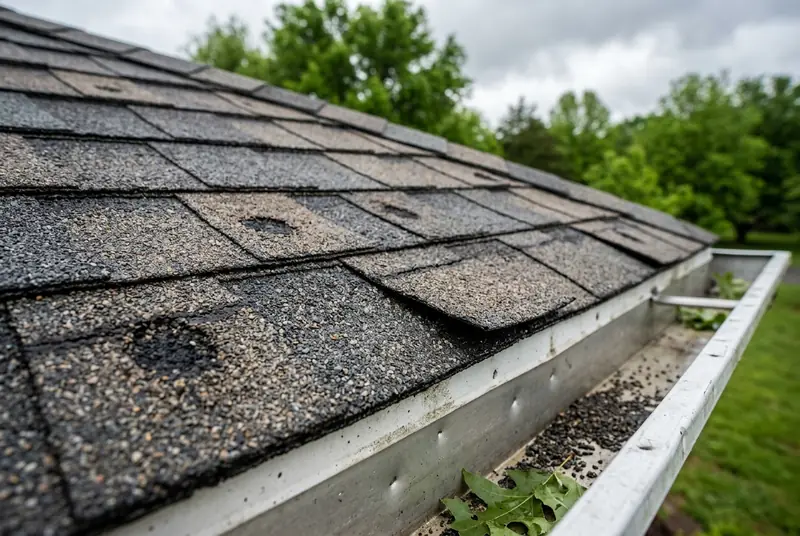
5″ K-Style Seamless Aluminum
The standard choice for most residential roofs up to roughly 1,400 sq ft with typical rainfall exposure. "Seamless" means the gutter run is fabricated on-site from a continuous coil to the exact length needed, rather than assembled from short factory sections joined with seams — seams are where most gutter leaks start, so fewer of them means fewer leak points.
- Available in .027" (standard) or .032" (heavier) aluminum gauge
- K-style profile (decorative crown-molding face) is the common residential choice in Sumner County
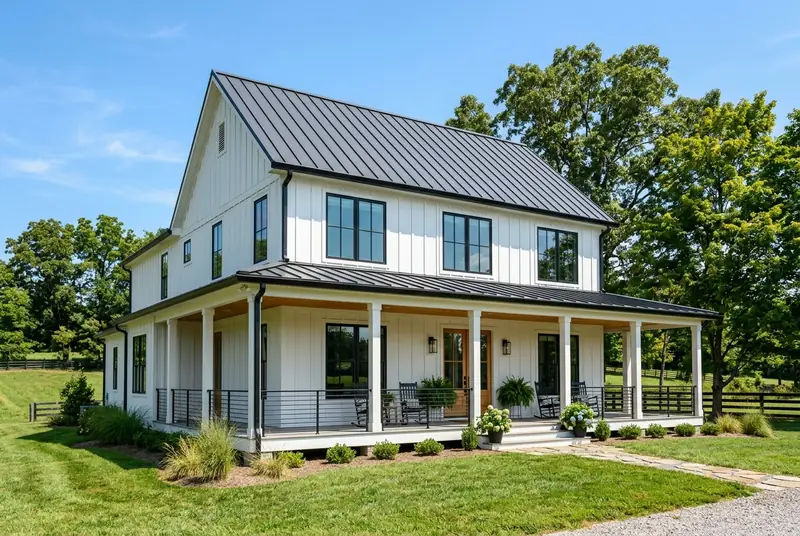
6″ K-Style Seamless Aluminum
Roughly 40–50% more water-carrying capacity than 5-inch gutters. Worth considering for larger roofs (over about 1,800 sq ft), steep roof pitches, or a metal roof — a steeper pitch or a slick metal surface sheds water faster than a standard asphalt-shingle slope, which increases the peak flow the gutter has to handle even if the total roof area is the same.
Half-Round Gutters
A rounded, open-trough profile associated with historic and higher-end architectural styles. Less common than K-style locally, but sometimes specified for a specific look or to match existing gutters on an older home. Generally costs more than K-style for a comparable size.
Sectional Gutters
Pre-formed short sections joined with seams and end caps, common on older homes built before seamless fabrication became standard. Each joint is a potential leak point over time — when replacing sectional gutters, seamless is generally the better long-term choice for the same reason it's now the market default.
Gutter Material Options Compared
Seamless aluminum is the standard, well-suited choice for most Sumner County homes — but it isn't the only material on the market.
| Material | Service Life | Relative Cost/Linear Ft |
|---|---|---|
| Seamless Aluminum | 20–30+ years with proper maintenance — the standard choice locally | $6–$16 |
| Galvanized / Painted Steel | 20–30 years — handles impact and heavy debris load better than aluminum, but heavier, and can rust once the coating is compromised | $9–$16 |
| Copper | 50–100+ years — develops a protective patina over roughly 7–20 years; a premium, high-cost material typically chosen for its appearance | $25–$40+ |
| Vinyl | 10–15 years — the only realistic DIY option, but can crack in cold and warp or fade under UV/heat | $3–$6 |
Aluminum's balance of cost, longevity, and low maintenance is why it's the default recommendation for most projects on this page. Steel and copper are legitimate choices worth discussing for a specific reason (heavy debris exposure, or matching a copper roof/architectural feature) rather than a general upgrade. Vinyl is generally not recommended for Middle Tennessee's temperature swings and summer UV exposure given its shorter service life.
How to Choose the Right Gutter System
5-inch K-style aluminum fits most Sumner County homes — but roof size, pitch, material, and tree exposure can each shift the right answer.
A rough starting point based on common situations — a free estimate weighs all of these against your actual roof and property:
Gutter Guard Types Compared
Every guard type trades off differently between debris protection, cost, and how it performs in heavy rain — none of them are truly "install and forget."
| Guard Type | How It Works | Known Limitation |
|---|---|---|
| Micro-Mesh | Fine stainless mesh blocks nearly all debris, including pine needles and shingle granules | Highest cost of the common options |
| Standard Mesh / Screen | Wire or plastic mesh over the gutter opening | Coarser mesh lets fine debris and granules through over time |
| Reverse Curve (Surface Tension) | A solid, pitched surface uses water's surface tension to curl water into the gutter while debris slides off the roof edge | In very heavy downpours, water volume can overwhelm the surface-tension effect and overshoot the gutter entirely — the most commonly reported failure mode |
| Foam Insert | Porous foam strip sits inside the gutter, lets water through while catching debris | Lowest cost, but can trap fine debris and seeds inside the foam over time, requiring periodic replacement |
| Brush Insert | Bristled cylinder sits in the gutter channel, lets water flow between bristles | Large debris can lodge between bristles, and the brush itself needs replacement every few years |
No gutter guard eliminates maintenance entirely — all of them reduce how often gutters need cleaning, and all of them still benefit from periodic visual inspection, especially after severe storms. Costs and exact performance vary by manufacturer and product; confirm current specifications and pricing with your installer.
Downspout Sizing & Placement
An undersized or poorly placed downspout can bottleneck a correctly sized gutter, or dump water right where you don't want it.
2″x3″ vs. 3″x4″ Downspouts
A standard 2"x3" downspout handles roughly 600 sq ft of roof area per inch of rainfall per hour; a 3"x4" downspout roughly doubles that capacity. Steeper roof pitches increase the effective peak flow beyond the roof's flat square footage, since water sheds faster — a common rule of thumb is to size for the roof's actual drainage area, not just its footprint. For most homes over roughly 2,000 sq ft, 3"x4" is a reasonable default given the modest added cost.
Spacing & Placement
A downspout is generally placed at least every 20–35 feet along a gutter run, though this varies with roof size, pitch, and local rainfall intensity — a long run with only one downspout is a common cause of overflow even when the gutter itself is correctly sized.
Gutter Installation Specs That Prevent Overflow & Sagging
Two details determine whether a correctly sized gutter actually performs — and they're the two most commonly shortcut on a low-bid installation.
Pitch (Slope)
Gutters need a slight, consistent slope toward the downspout — roughly 1/16" of drop per foot of gutter run is a commonly used minimum. Too little pitch and water sits and stagnates (or overflows in heavy rain); too much pitch is a visible cosmetic issue on a long run. A gutter installed dead level is one of the most common causes of standing water and premature sagging.
Hanger Spacing
Hangers (the brackets that secure the gutter to the fascia) are commonly spaced around every 2 feet for standard residential use; wider spacing can look fine on installation day but fails under the added weight of wet leaves, ice, or standing water from a clog. Gutters pulling away from the fascia are usually a hanger-spacing or fastening problem, not a defect in the gutter material itself.
Fascia Board Repair & Replacement
Fascia damage and gutter problems are usually connected — one causes or worsens the other.
The fascia board is the trim board at the roof edge that gutters are hung from. It rots for a predictable set of reasons: overflow from a clogged or undersized gutter sitting against it repeatedly, a gutter with failed hangers pulling away and letting water run behind it instead of through it, or ice dams in freeze-thaw conditions forcing water backward under the roof edge and behind the gutter system. Whichever the cause, a soft or rotted fascia board can't hold gutter hangers securely — which is why fascia condition and gutter performance have to be addressed together, not as two separate problems.
What Gets Checked
- Soft spots, discoloration, or visible rot along the fascia
- Whether hangers are still securely anchored or pulling loose
- Soffit and roof-edge condition immediately behind the fascia
Repair vs. Replace
A localized soft spot can sometimes be cut out and spliced; widespread rot along a run generally calls for replacing the full board. Since new gutters are typically re-hung on the same fascia, addressing fascia damage before or during gutter replacement (rather than after) avoids re-hanging a new gutter system on a board that's already failing.
The Seasonal Debris Cycle in Sumner County
Gutter problems here follow a predictable annual pattern, driven by the region's mature tree canopy and storm season.
Spring
Seed pods, pollen buildup, and the season's first heavy thunderstorms test whether winter debris has already partially clogged the system — a common time for overflow to first show up.
Summer
Sumner County's severe thunderstorm season (see Storm Damage & Insurance Claims) puts real volume through the system quickly — this is when undersized gutters or downspouts reveal themselves.
Fall
Leaf drop from the mature oak and hardwood canopy common in older Hendersonville, Gallatin, and Portland neighborhoods is the single heaviest debris load of the year — the main reason gutter guards get evaluated in this season.
Winter
Occasional freeze-thaw cycles can produce ice dams at the roof edge, which add weight to the gutter and can force water backward under the shingles and behind the gutter system — see Fascia Board Repair above for the resulting damage pattern.
Gutter Warranty Types, Kept Separate
Like roofing, "warranty" on a gutter project isn't one thing — the issued document for your specific project controls over the general description below.
Material / Finish Warranty
Aluminum coil stock commonly carries a manufacturer finish warranty in the range of 20 years to lifetime, depending on the coil supplier and product line — covering the paint finish itself, not workmanship. Confirm the exact coverage for the specific coil being used on your project.
Contractor Workmanship Warranty
A separate warranty from your installer covering installation errors — incorrect pitch, inadequate hanger spacing, or a poor seal at end caps and corners. These commonly range from a few years to a lifetime depending on the installer, and are entirely independent of the material warranty above.
Gutter guards typically carry their own separate warranty terms from the material and workmanship coverage above — ask specifically what's covered if you're adding guards to a new or existing system.
How to Compare a Gutter Proposal
Two quotes with a similar per-foot price can differ meaningfully in scope. A complete proposal should specify:
Material & Sizing Specifics
- Gutter size (5" vs. 6") and profile (K-style vs. half-round)
- Material and gauge (.027" vs. .032" aluminum, or an alternative material)
- Downspout size (2"x3" vs. 3"x4") and count/placement along each run
- Hanger type and spacing
- Gutter guard type, if included, and its specific warranty terms
Scope & Warranty
- Old-gutter removal and disposal included in the price
- Fascia inspection included, and how fascia repair (if needed) is priced
- Downspout extensions and where they discharge
- Material/finish warranty separate from the contractor's workmanship warranty
- Two-story access charges, if applicable, stated up front
Gutter & Downspout Pricing
Figures below are 2026 market ranges for a typical Sumner County home — get a written, itemized quote for your specific project.
Two-story homes and old-gutter removal typically add $1–$3 per linear foot. Prices shift with material costs and project specifics — confirm current pricing with your installer.
What This Gutters & Downspouts Page Covers — and What It Doesn't
Covered on This Page
- Gutter sizing, style, material options, and how to choose between them
- Gutter guard comparison, downspout sizing/placement, and installation specs
- Fascia board repair, the Sumner County seasonal debris cycle, and warranty types
- How to compare a gutter proposal, and pricing for gutters, guards, and fascia repair
Covered Elsewhere
- Ice dam prevention on the roof side — attic ventilation and insulation — see Roof Replacement and Roof Maintenance Program
- Full roof replacement, including how a metal roof's runoff affects gutter sizing — see Roof Replacement and Metal Roofing
- Major yard drainage work beyond a downspout extension (French drains, grading) — ask your installer for a referral if this applies to your property
- Recurring gutter cleaning as a scheduled service — see Roof Maintenance Program
Related Roofing Services
Gutters & Downspouts FAQs
5-inch K-style fits most residential roofs up to roughly 1,400 sq ft with typical rainfall. Larger roofs (over about 1,800 sq ft), steep pitches, or a metal roof shed water faster and generally benefit from 6-inch gutters' roughly 40–50% greater capacity.
The gutter run is fabricated on-site from a continuous aluminum coil to the exact length of your roofline, rather than assembled from short factory sections joined with seams. Fewer joints means fewer potential leak points compared to older sectional gutters.
For most properties with meaningful tree canopy, yes — they significantly reduce how often gutters need cleaning. No guard type eliminates maintenance entirely, and each has a known limitation (see the comparison table above), so the right choice depends on your debris type, budget, and how much reduced maintenance is worth to you.
Common causes besides clogs: gutters undersized for the roof area, insufficient pitch causing water to sit and back up, too few downspouts for the length of the run, or a downspout that's too small for the roof area it's draining. A free estimate can identify which of these applies to your specific gutters.
Roughly every 20–35 feet is a common guideline, though the right spacing depends on roof size, pitch, and local rainfall intensity. A long gutter run with only one downspout is a frequent, avoidable cause of overflow.
Usually one of three causes: repeated overflow from a clogged or undersized gutter sitting against the board, a gutter with failed hangers letting water run behind it instead of through it, or ice dams forcing water backward under the roof edge. Since fascia and gutters interact, both are usually worth addressing together.
Not always, but it's worth checking. A metal roof sheds water faster than asphalt shingles on the same pitch, which can reveal that gutters sized for the old roof are now undersized for the new one's peak flow. See Metal Roofing for the material comparison.
Commonly $6–$16 per linear foot installed as of 2026, with a typical single-story home (around 200 linear ft) landing around $1,200–$2,800 total. Two-story access and old-gutter removal typically add $1–$3 per linear foot. See the pricing section above.
.027" is the common industry-standard thickness; .032" is a heavier option that resists denting (from ladders or debris) and sagging better over time, at a modest additional cost. Worth asking about specifically if you have frequent ladder access needs or a harsher exposure.
It can help significantly if the water source is roof runoff dumping near the foundation — extending the downspout to discharge several feet away, onto ground that slopes away from the house, addresses that specific path. If the moisture has other causes (grading, a foundation crack, groundwater), an extension alone won't fully resolve it — that's outside the scope of gutter work.
For most Sumner County homes, aluminum's balance of cost, longevity, and low maintenance makes it the practical default. Steel is worth considering if you have heavy debris load or impact exposure; copper is a premium, very long-lived material typically chosen for its appearance or to match an existing copper roof or architectural feature, at a substantially higher cost. See the material comparison table above.
The material/finish warranty (commonly 20 years to lifetime on aluminum coil stock) covers the paint finish itself, not installation. A separate contractor workmanship warranty covers installation errors like incorrect pitch or hanger spacing. Gutter guards typically carry their own separate warranty terms. Confirm all three for your specific project rather than assuming one covers everything.
Exact gutter size and profile, material and gauge, downspout size and placement, hanger type and spacing, old-gutter removal, fascia inspection, and separate material vs. workmanship warranty terms. See "How to Compare a Gutter Proposal" above.
Leaf drop from mature oak and hardwood canopy — common in older Hendersonville, Gallatin, and Portland neighborhoods — is the heaviest debris load of the year, and it's a genuine annual pattern, not a sign anything is wrong with your gutters. A gutter guard suited to your specific tree type and debris volume (see the comparison above) is the usual fix for a recurring fall problem.
Get a Free Gutter & Fascia Estimate
A free estimate includes checking your fascia condition and downspout sizing — not just measuring for new gutters.
TN Roofing Crew connects property owners with vetted, independently licensed and insured Tennessee roofing and gutter contractors. Installation, materials, and warranties are handled directly by the independent contractor assigned to your project.
Request a Free Estimate
Tell us about your gutters and your assigned contractor will check your fascia and downspouts during the visit.