Roof Maintenance Program in Sumner County, TN
Scheduled inspections and small fixes that catch a problem while it's still a $200 repair, not a $10,000 replacement. TN Roofing Crew connects Sumner County homeowners and property managers with licensed, insured local roofing crews for ongoing roof care — not just emergency calls.
Maintenance Is Not the Same Thing as an Inspection
These four terms get used interchangeably, but they're different services with different scopes.
The Four Related Services
- Inspection evaluates roof condition and documents findings — a point-in-time assessment. See Free Roof Inspection.
- Maintenance performs planned, recurring preventive tasks on a schedule — this page.
- Repair corrects a confirmed, specific defect. See Roof Repair.
- Replacement addresses widespread deterioration or a roof system that's no longer appropriate. See Roof Replacement.
A Maintenance Visit Is Not Automatically
- A complete roof inspection or certification-grade assessment
- A full leak diagnosis
- A storm-damage or insurance-claim assessment
- A structural evaluation
Why a Maintenance Plan Actually Pays Off
Most roof failures don't start as emergencies — they start as small, easy-to-miss issues that go unnoticed for a year or two.
Catch Small Issues Early
A cracked pipe boot or a lifted shingle tab is a $150–$450 fix caught early. Left alone through a wet season, it becomes decking rot and a much larger repair.
Support Your Manufacturer Warranty
Some manufacturer warranties call for documented, periodic maintenance — skipping it can weaken a claim years later. See the warranty section below for the specifics and limits of this.
Extend Real Service Life
Clear gutters and clean, sealed penetrations mean less standing moisture and less UV/thermal stress on the roof system over time.
A Paper Trail That Matters at Sale Time
Dated inspection reports are exactly what a buyer's inspector or a roof certification request wants to see — see Roof Certification Letters.
This matters more here than in a lot of places — Sumner County recorded 8 tornadoes in 2021 alone, its most active year on record, and 45 total tornado events since 1950 (see Storm Damage & Insurance Claims). A roof already weakened by an unnoticed, small issue holds up worse when a real storm hits it.
What's Included, Conditional, and Excluded
A visual roof-surface review, not a full teardown — here's exactly where the line sits.
Conditional (Only If Specifically Included)
- Attic or interior observation
- Roof walking on steep, aged, or otherwise unsafe surfaces — may be limited to what's visible from a ladder or drone instead
- Minor resealing or small fixes completed on the spot (a cracked pipe boot collar, a loose ridge cap)
Not Included
- Full leak diagnosis — see Roof Repair
- Roof certification letters — see Roof Certification Letters
- Storm-claim documentation or representation — see Storm Damage & Insurance Claims
- Structural engineering, mold remediation, plumbing/HVAC work, large-scale vegetation removal, deck replacement, or commercial moisture surveys/core sampling
- Permanent repair beyond a minor, on-the-spot fix
If a visit uncovers something bigger than a minor fix — widespread wear, a confirmed leak, or storm damage — you get a separate written scope before any additional work happens. It's never quietly added to the maintenance invoice.
Residential & Commercial Maintenance Are Different Programs
A residential tune-up and a commercial roof-management program cover genuinely different components.
Residential Maintenance Addresses
- Shingles, ridge caps, and drip edge
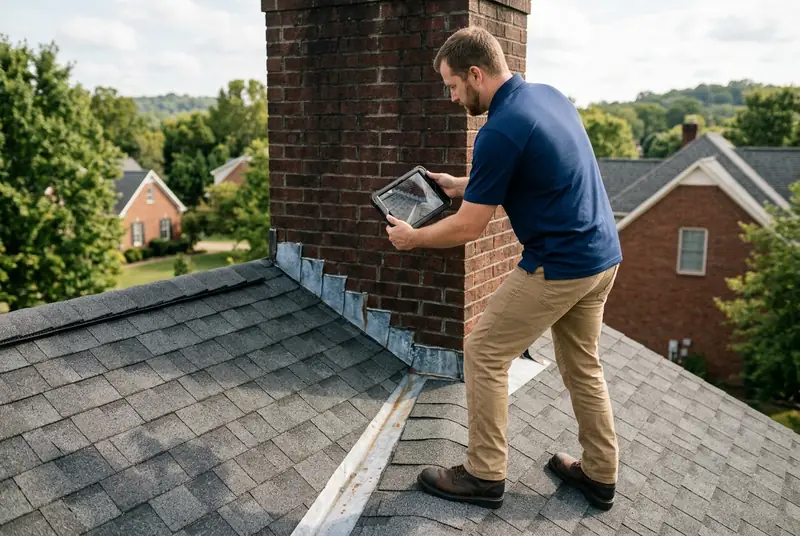
- Valleys, step flashing, and chimney/skylight flashing
- Pipe boots and other roof penetrations
- Gutters, downspouts, fascia, and soffit
- Moss/algae growth and overhanging tree limbs
- Attic ventilation
Commercial Maintenance Addresses
- Membrane seams and base flashing
- Parapets, coping, roof drains, and scuppers
- Ponding water and overflow drainage
- HVAC curbs, rooftop equipment, and walk pads
- Roof access, safety, and tenant/facility coordination
- Maintenance logs supporting warranty and facility records
A residential tune-up and a commercial roof-management program aren't interchangeable — see Commercial Roofing for the full commercial picture.
The Warranty Connection Worth Understanding
Documented maintenance may help owners satisfy certain warranty and stewardship requirements, but the specific issued warranty controls — not a general assumption about what maintenance does. Requirements vary by manufacturer and warranty type, and maintenance does not guarantee coverage.
- Some manufacturers require documented periodic maintenance for certain warranty tiers — check your specific warranty document, not a general assumption
- The installing contractor and the manufacturer can have different responsibilities under the same warranty
- A maintenance program cannot retroactively repair damage a warranty already excludes
- A dated, written maintenance report is the kind of documentation manufacturers that do have a requirement tend to ask for
The Maintenance Program Process
Set it up once, then it's handled on a schedule — not something you have to remember to call about.
What Actually Sets the Schedule
"Twice a year" is a starting point, not the whole answer. Real cadence depends on:
- Roof type, age, and prior leak history
- Tree exposure and drainage complexity
- Building use, occupancy risk, and rooftop equipment
- Manufacturer warranty requirements, where applicable
A Rough Model
- Newer, low-risk residential roof: periodic preventive review
- Older or tree-exposed roof: more frequent review
- Commercial low-slope roof: scheduled inspection and drainage maintenance
- After a storm: an event-triggered assessment, not a routine visit
- Active leak: immediate repair, not routine maintenance — call directly
Baseline Inspection & Enrollment
An initial inspection documents your roof's starting condition, and you choose a residential or commercial plan based on your property.
Scheduled Visits
Commonly spring and fall for most residential plans, adjusted up or down based on the risk factors above — not a one-size-fits-all interval.
Documented Report Every Visit
Each report includes the property and date, areas reviewed, tasks completed, photographs, observed conditions, a priority level, recommended next action, anything not inspected, and a follow-up timeframe — kept on file as your maintenance history.
Priority Scheduling When Something Comes Up
Enrolled properties get priority scheduling for repairs found during a visit, or for storm response, ahead of general call-in scheduling.
"No issue observed" is a genuinely common, genuinely fine outcome — a maintenance visit isn't a sales call. Anything at "Repair Soon" or beyond gets its own written scope, routed to Roof Repair, Roof Replacement, or an emergency dispatch as appropriate.
What Changes by Season in Sumner County
Spring
Storm and hail review, plus drainage clearing after winter debris buildup.
Summer
UV and heat stress on sealants and rubber pipe boots — the most common summer failure point.
Fall
Leaves and debris in valleys, gutters, and downspouts before winter weather arrives.
Winter
Freeze-thaw stress, exposed fasteners, and confirming emergency leak readiness ahead of ice or heavy rain.
What a Maintenance Plan Costs
General 2026 market ranges — your actual plan cost depends on roof size, material, and how many visits per year.
Residential Annual Plan
Typical single-family homeCommercial Maintenance Plan
Flat & low-slope roofsEvery plan is confirmed in writing after a baseline inspection. See Commercial Roofing for the full commercial service picture.
Not ready to commit to an annual plan? Ask about a single seasonal tune-up visit instead — it won't include the ongoing warranty-documentation benefit of a full plan, but it covers the same inspection and minor-fix checklist for a one-time visit.
What Maintenance Covers — and What It Doesn't
A maintenance plan prevents problems and catches them early. It isn't a substitute for repair or replacement once damage is already significant.
What It Covers
- Scheduled, documented inspections twice a year
- Gutter cleaning and minor resealing/small fixes
- Warranty-supporting documentation
- Priority scheduling for anything found
What It Doesn't Cover
- Significant repairs found during a visit — that gets its own written scope, see Roof Repair
- A roof that's already past its service life — see Roof Replacement
- Storm/hail damage claims — that's a separate documented process, see Storm Damage & Insurance Claims
- Emergency same-day response — call directly for an active leak
Which Service Do You Actually Need?
A rough starting point — a free inspection confirms it either way.
Related Services
Roof Maintenance Across Sumner County
Maintenance plans are available through our partner network across Sumner County.
Roof Maintenance Program FAQs
Residential plans generally run $299–$599 per year for two scheduled visits. Commercial plans are priced against the actual roof — a typical 20,000 sq ft roof runs $600–$800 per visit, or $1,200–$1,600 per year on a biannual schedule. See the pricing section above.
Most residential and commercial plans include two visits per year, commonly scheduled for spring and fall to catch both winter wear and storm-season damage. Frequency can be adjusted based on your roof and property type.
For many manufacturer warranties, especially extended or enhanced coverage tiers, yes — documented periodic maintenance is often required for the warranty to remain valid. Requirements vary by manufacturer, so check your specific warranty paperwork, but a maintenance plan gives you exactly the documentation these warranties tend to ask for.
You get a separate written scope and estimate before any additional work happens — nothing beyond small, quick fixes gets added to your maintenance invoice without your sign-off first.
Often yes, mainly for the warranty documentation and gutter maintenance — even a newer roof benefits from clear gutters and an early check on flashing and penetrations before small issues start.
Terms vary by the contractor administering your plan — ask about cancellation and pause policies before enrolling so there are no surprises.
Yes — commercial plans are priced against the actual roof and scheduled frequency, and often support the documentation required by commercial membrane warranties. See Commercial Roofing.
No. Maintenance performs planned preventive tasks on a schedule; an inspection is a dedicated, point-in-time evaluation and written finding. A maintenance visit isn't automatically a full inspection, leak diagnosis, or certification-grade assessment — see Free Roof Inspection if that's specifically what you need.
Gutter and downspout clearing is part of the standard checklist. Attic or interior observation is conditional — only included if it's specifically part of your plan, so confirm it at enrollment if it matters to you.
On steep, aged, or otherwise unsafe surfaces, the review may be limited to what's visible from a ladder, drone, or accessible sections, rather than a full walk of the roof. That limitation is noted in your report.
Not reliably. A visible surface review can catch soft spots or staining that suggest a problem, but confirming hidden decking damage usually requires further evaluation or, in some cases, isn't confirmed until a repair or tear-off is underway — see Roof Repair.
When a visit's priority level lands at "Replacement Planning" — widespread age-related wear or damage beyond what repairs can reasonably address. At that point you get a straight recommendation and a conversation about Roof Replacement, not another maintenance visit.
Enroll Your Roof in a Maintenance Plan
Start with a baseline inspection, then let a scheduled plan catch small issues before they become expensive ones.
TN Roofing Crew connects property owners with vetted, independently licensed and insured Tennessee roofing contractors. Maintenance visits, repairs, and warranties are provided directly by the independent contractor assigned to your property.
Request Plan Details
Tell us about your property and an assigned partner contractor will put together a plan and price — no obligation.
Seasonal Roof Maintenance Matrix for Middle Tennessee
Middle Tennessee experiences four distinct seasonal shifts that impact roofing assemblies differently. Scheduled preventive tune-ups address vulnerability points before extreme weather hits.
| Season | Key Climate Threat | Critical Preventive Tasks | Target System Components |
|---|---|---|---|
| Spring (March – May) | Severe thunderstorms, convective hail, intense downpours | Inspect sealant strips, reseal pipe flashings, clear winter debris from valleys | Penetrations, step flashing, valley metal, gutter drainage |
| Summer (June – August) | Extreme UV index, attic heat buildup (130°F–150°F+), thermal expansion | Inspect ridge vent airflow, check for curled shingles, verify soffit intake | Ridge vents, soffit baffles, asphalt shingle granule bond |
| Fall (September – November) | Heavy deciduous leaf fall, pine needle accumulation, moisture retention | Comprehensive gutter and downspout cleaning, valley sweep, roof wash check | Gutters, downspouts, valleys, roof-to-wall step intersections |
| Winter (December – February) | Freeze-thaw cycles, freezing rain, ice dam risk at eaves | Inspect eave seals, verify attic insulation depth, seal masonry chimney cracks | Eaves, drip edge, chimney flashing, low-slope transition seams |
Residential vs. Commercial Roof Maintenance Protocols
Maintenance specifications differ significantly between steep-slope residential roofs and low-slope commercial membranes.
| Program Feature | Residential Shingle / Metal Program | Commercial TPO / EPDM Flat Roof Program |
|---|---|---|
| Inspection Frequency | Annual or bi-annual (Spring & Fall) | Semi-annual plus post-severe weather event |
| Primary Inspection Focus | Pipe boots, flashing joints, granule loss, shingle seal | Field seams, perimeter parapet termination, rooftop HVAC scuppers |
| Water Drainage Assessment | Gutter slope, downspout clearing, valley clearways | Ponding water depth (>48 hrs after rain), roof drain strainer clearing |
| Documentation Provided | Photo audit report, remaining life estimate, minor tune-up log | Commercial roof asset log, warranty compliance sign-off, capital plan |
Guides, Pricing & Local Roofing Articles
- Spring Roof Maintenance Checklist for Sumner County Homeowners →
- How Often Should You Have Your Roof Professionally Inspected? →
- Gutter Cleaning Schedule for Middle Tennessee Homes →
- Tree Trimming & Roof Health: Why Overhanging Limbs Matter →
- Moss & Algae Streaks on Tennessee Roofs: Safe Prevention →
- Attic Ventilation 101: Protecting Shingles From Inside Out →
- Preventive Maintenance Contracts for Commercial Roofs →