Twice a year and after storms is the safe rule in Middle Tennessee. See what each roof check covers, then book yours with local roofers: (615) 647-8320.
Residential roofs in Tennessee should be professionally inspected every two years for roofs under 10 years of age, and annually for roofs exceeding 10 years of age. Additionally, an immediate forensic inspection should be scheduled following any confirmed convective hailstorm (hailstones measuring 1.0 inch or greater) or high-wind event (gusts exceeding 50 to 60 mph). An annual roof checkup and routine preventive inspection identify latent shingle bruising, failing pipe boot collars, and degraded flashings years before visible water stains appear on interior ceilings.
Why Biannual and Milestone Roof Inspections Matter in Middle Tennessee
Sumner County's climate is notoriously demanding on residential building envelopes. Between summer attic temperatures exceeding 140°F, elevated humidity from Old Hickory Lake, severe spring hail squalls, and winter freeze-thaw cycles on the Highland Rim, roofing materials undergo continuous thermodynamic expansion and contraction.
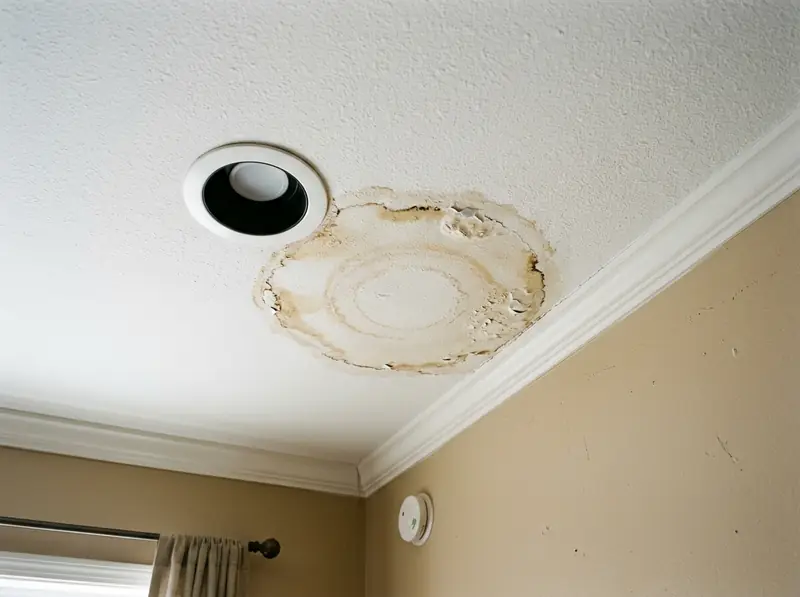
Most homeowners assume that as long as water is not dripping from the living room ceiling, their roof is performing perfectly. In reality, water intrusion is a late-stage symptom of a failure that began months or years prior. By the time water stains drywall, moisture has often soaked attic insulation, fostered mold colonies, and rotted plywood roof sheathing.
The 4 Key Inspection Triggers for Sumner County Homeowners
Professional roofing audits are structured around four distinct operational triggers:
- 01
Age-Based Baseline Audits (The 10-Year Threshold)
Roofs under 10 years old require inspections every two years to verify proper drainage and fastener integrity. Once an asphalt shingle roof passes its 10th year in Middle Tennessee, neoprene pipe boots degrade, factory thermal adhesives weaken, and annual audits become essential to catch minor flashing cracks.
- 02
Post-Storm Forensic Inspections (Severe Weather Triage)
Following confirmed severe thunderstorm fronts across Hendersonville, Gallatin, White House, Goodlettsville, or Portland, schedule an inspection within 30 to 60 days. An inspector chalks test squares on all slopes, verifying whether hail impacts have fractured the shingle fiberglass backing.
- 03
Pre-Listing Real Estate Transaction Audits
Before placing a home on the market, a professional roof audit ensures there are zero surprise condition flags during buyer home inspections. Having a clean roof certification report eliminates contentious buyer concession requests.
- 04
Seasonal Pre-Winter & Pre-Spring Maintenance Checks
An early spring check verifies that winter freezes did not crack mortar reglets around chimneys, while a late autumn check ensures valleys and gutters are clear of fallen hardwood leaves before winter freezes arrive.
Inspection Frequency & Diagnostic Protocol Matrix
Review the recommended inspection schedule across different roofing materials and property profiles:
| Roofing System & Age | Recommended Inspection Frequency | Primary Focus Area | Common Latent Defect Detected |
|---|---|---|---|
| Architectural Shingles (<10 Yrs) | Every 2 Years + Post-Storm | Valleys, pipe boots, gutters | Debris accumulation, premature collar wear |
| Architectural Shingles (10–20 Yrs) | Annual (Every 12 Months) | Flashing reglets, shingle flexibility | Dry-rotted pipe boots, curled tabs, granule loss |
| Standing Seam Metal Roof | Every 3 to 4 Years | Perimeter coping, penetration seals | Sealant joint degradation at chimneys & curbs |
| Exposed Fastener Metal Roof | Every 2 to 3 Years | Neoprene screw washers, panel laps | Backed-out screws, cracked rubber washers |
| Commercial Low-Slope (TPO/EPDM) | Bi-Annual (Spring & Fall) | Drain sumps, scuppers, parapet seams | Ponding water, clogged drains, seam splits |
What Does a Comprehensive Professional Inspection Include?
A reputable licensed contractor performs an exhaustive multi-point assessment covering both exterior and interior roof components:
- Rooftop Surface Audit: Examining field shingles for granule adhesion, wind-creased tabs, blistering, and physical hail depressions across 10x10 test squares.
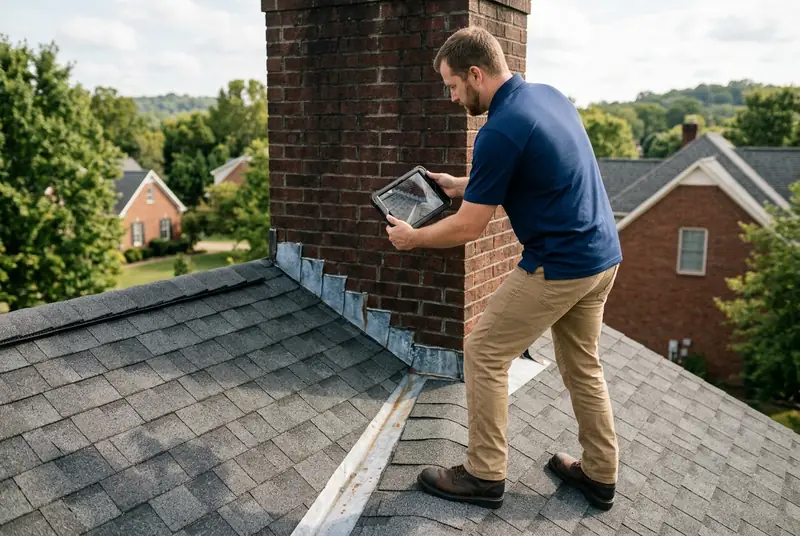
- Penetration & Flashing Check: Inspecting plumbing vent boots, chimney step and counter-flashings, skylight curb seals, and furnace B-vent collars.
- Water Drainage System: Checking gutter slopes, downspout extensions, valley metal linings, and eave drip edges per IRC R905.
- Attic Interior Inspection: Climbing into the attic to inspect the underside of the wood roof deck for water stains, mold growth, daylight penetrations, and verifying that blown insulation has not blocked eave soffit intake baffles per IRC R906.
Tennessee Contractor Licensing & Consumer Integrity
Ensure that any inspector climbing your roof is an established local licensed contractor. In Tennessee, roofing contracts of $25,000 or more legally require a licensed General Contractor (BC or BC-A), verifiable at verify.tn.gov.
Additionally, reputable contractors never charge upfront inspection fees for residential storm damage evaluations, and Tennessee state law strictly prohibits contractors from offering to pay, waive, rebate, or absorb your insurance deductible.
Sumner County Annual Inspection Schedules & Hail Corridor Timing
Establishing an intentional roof inspection cadence protects residential warranties and preserves insurance claim eligibility following severe weather events across the Cumberland Valley:
- Recommended Bi-Annual Inspection Rhythm: Perform an initial visual inspection in early spring (March/April) before the arrival of peak convective hail storms, and a second comprehensive assessment in late autumn (October/November) after deciduous trees shed leaves.
- Post-Severe Weather Baseline Audits: Whenever the National Weather Service detects 1.0-inch or larger hail or straight-line wind gusts exceeding 50 mph in your Sumner County zip code, request an immediate professional inspection to document physical evidence before subsequent weathering occurs.
- High-Resolution Drone Telemetry: Modern roofing inspections utilize aerial drones equipped with optical zoom and thermal sensors to examine complex, steep-slope gables and multi-story elevations without causing unnecessary foot-traffic scuffing on delicate shingle surfaces.
- Comprehensive Attic Ventilation Audit: A thorough professional inspection assesses attic ventilation balance, ensuring continuous soffit intake openings and ridge exhaust conform to adopted International Residential Code standards.
Frequently Asked Questions About Roof Inspections
Most reputable local roofing contractors provide free visual roof inspections and storm damage assessments for homeowners. If a formal written engineering certification or real estate buyer inspection report is requested, independent fees typically range from $150 to $350.
You can perform preliminary visual ground audits using binoculars to check for missing shingles, bent gutters, and damaged downspouts. However, subtle hail impact fractures, cracked pipe collars, and loose flashings cannot be detected from the ground; an on-roof physical or aerial drone inspection is required.
Trained inspectors wearing soft-soled, non-marking footwear do not damage sound shingles. However, walking on an aged roof during extreme summer heat (when asphalt softens) can scuff granules. Professional contractors schedule inspections during cooler morning hours or utilize high-definition aerial drone cameras.
Next Steps & Related Roofing Guides
Related Sumner County Roofing Guides: Continue reading Gutter Cleaning Schedule for Middle Tennessee Homes and Tree Trimming & Roof Health: Why Overhanging Limbs Matter.