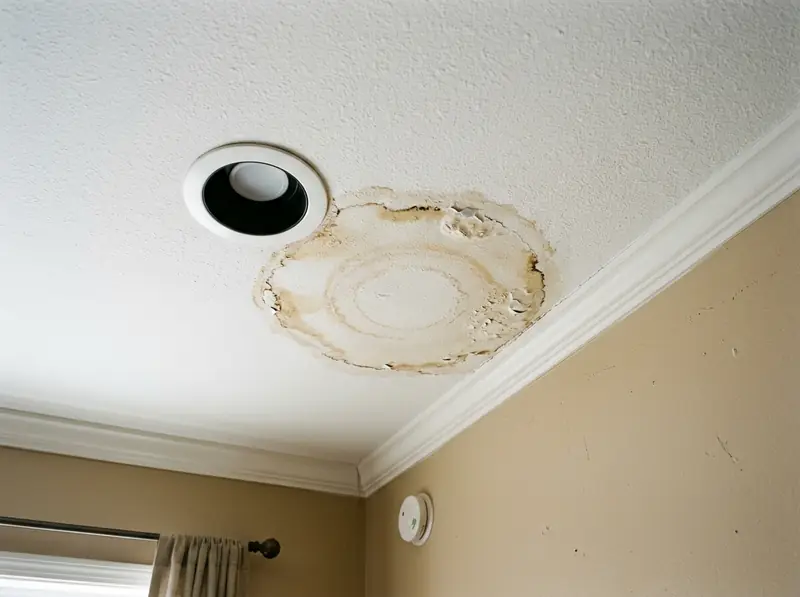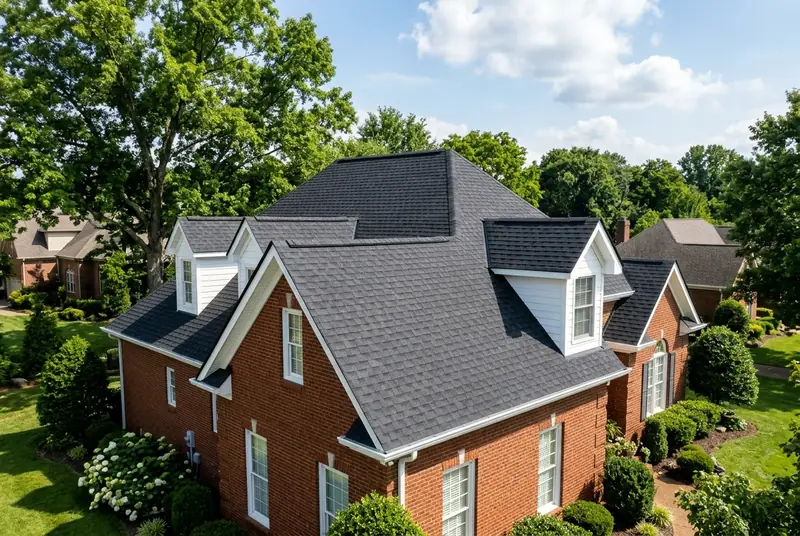
Overhanging limbs scour shingles, hold moisture and invite rodents. Learn how far to trim back, then book a roof check if damage shows: (615) 647-8320.
Overhanging tree branches represent a severe, compounding threat to residential roof health in Middle Tennessee. Mature oak, hickory, and maple limbs within 10 feet of a roof cause mechanical abrasive scouring (stripping shingle granules during windstorms), drop heavy leaf debris that chokes gutters and valleys, foster moisture-retentive moss and cyanobacteria growth through continuous shade, and provide highway access for squirrels and raccoons to breach attic vents. Trimming limbs back at least 10 feet extends shingle life by 5 to 8 years and prevents catastrophic structural storm impact.
The 4 Hidden Ways Overhanging Trees Destroy Roofs
Homeowners often cherish mature shade trees for their summer cooling benefits. However, when branches extend over the roof plane, they initiate four distinct mechanical and biological destruction mechanisms:
- 01
Mechanical Wind Abrasion (The "Sweeper" Effect)
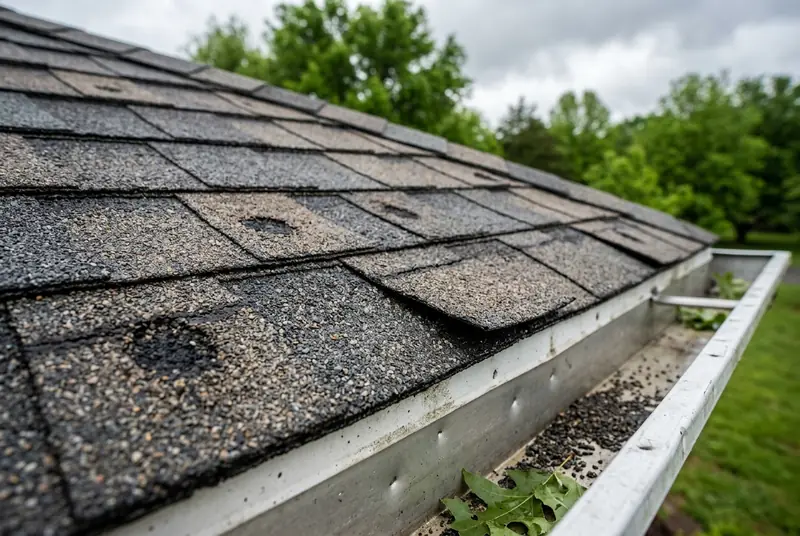
During Middle Tennessee's frequent spring thunderstorms, 40 to 60 mph wind gusts whip heavy hardwood branches back and forth across shingles. This continuous abrasive friction acts like coarse sandpaper, gouging the protective ceramic granules from the shingle surface and exposing the fragile raw asphalt matting beneath to premature degradation.
- 02
Chronic Shade & Biological Moisture Retention
Asphalt shingles are designed to dry thoroughly in direct sunlight following rainfall. Dense tree canopies block solar radiation, leaving northern and eastern roof planes in perpetual dampness. This moisture incubator accelerates the growth of Gloeocapsa magma (black cyanobacteria) and thick moss colonies whose root-like rhizoids lift shingle tabs and rot wood decking.
- 03
Severe Structural Impact Hazards
Middle Tennessee encounters heavy wet snow, winter freezing rain, and severe thunderstorm squalls. Dead or diseased tree limbs (particularly brittle silver maples and water oaks) snap under ice loads or high wind, crashing through plywood roof sheathing and breaking structural rafter framing.
- 04
Wildlife Highways into Attic Spaces
Overhanging limbs extending within 8 to 10 feet of a roof act as an open bridge for squirrels, raccoons, and roof rats. Wildlife use branches to access vulnerable plastic roof vents, chewing through louvers and building dens inside attic insulation.
Comparison Matrix: Overhanging Canopy vs. Properly Cleared Buffer
Review the long-term structural and economic differences between maintaining an uncleared tree canopy versus enforcing a 10-foot cleared buffer:
| Roof Condition Factor | Unmaintained Overhanging Canopy | 10-Foot Cleared Buffer Protocol | Homeowner Benefit |
|---|---|---|---|
| Granule Retention | Scoured away by branch friction in 5–7 years | Protective mineral granules remain intact | Preserves manufacturer 20-to-25-year service life |
| Moss & Algae Growth | Dense moss cushions lift and unseal tabs | Sunlight naturally dries roof surface | Prevents organic rot; maintains clean curb appeal |
| Storm Branch Impact | High risk of punctured decking in windstorms | Falling limbs clear roof edges safely | Prevents emergency structural leaks and tarping |
| Gutter Maintenance | Gutters clog 4–6 times annually with debris | Cleanings reduced to 2 times annually | Saves $300–$600 in annual gutter cleaning costs |
| Wildlife Attic Access | Direct access to ridge vents and dormers | Squirrels cannot leap 10+ feet horizontally | Eliminates animal attic contamination and chewed wiring |
The 10-Foot Buffer Rule: Industry Standards
Certified arborists and licensed roofing contractors universally recommend maintaining a 10-foot clearance zone between tree limbs and residential roof planes:
- Vertical Clearance: Trim all branches hanging directly over the roof to provide at least 10 feet of vertical clearance, allowing sunlight and wind to dry shingles and preventing drooping branches from touching shingles under heavy rain or ice loads.
- Horizontal Clearance: Cut back lateral branch tips so they terminate at least 10 feet horizontally away from the home's eave and gutter line. Squirrels can comfortably leap 6 to 8 feet horizontally; a 10-foot buffer effectively cuts off their access route.
- Deadwood Removal: Have a licensed tree service remove all dead, diseased, or hollow limbs throughout the tree crown, even if they sit higher than 10 feet, to eliminate falling projectile hazards during severe windstorms.
Does Insurance Cover Tree Damage to Roofs in Tennessee?
Standard Tennessee homeowner insurance policies provide coverage for sudden, accidental falling tree impacts:
If a healthy tree or branch snaps during a covered storm event and damages your roof, the insurance carrier covers the cost of tree removal from the roof structure, emergency tarping, and structural roof repairs minus your policy deductible.
However, if an insurer determines that a tree was completely dead and rotted for years prior to falling — and you failed to remove it despite obvious rot — the carrier may dispute coverage under deferred maintenance exclusions. Furthermore, if a tree falls in your yard without touching any insured structure, insurance does not pay for tree removal.
The 10-Foot Canopy Clearance Rule & Microclimate Shading Impacts
Proximity to mature hardwoods presents distinct biological and physical hazards to roofing assemblies in Middle Tennessee:
- Enforcing the 8 to 10 Foot Clearance Standard: Maintain an absolute minimum clearance of 8 to 10 feet between living branch tips and the nearest roof surface. This buffer prevents branches from whipping against shingles during 50+ mph thunderstorm downbursts.
- Eliminating Wildlife Access Bridges: Overhanging boughs serve as highway bridges for squirrels, raccoons, and roof rats, granting easy access to vulnerable ridge vents, chimney shoulders, and soft plumbing boot flashings.
- Mitigating Microclimate Moisture Retention: Dense overhead foliage blocks morning sunlight, preventing dew and rain from evaporating. Persistent damp shade accelerates the colonisation of destructive moss and lichen colonies that digest shingle limestone fillers.
- Minimizing Organic Tannin Staining: Decaying leaves and pine needles trapped on shingle slopes release acidic organic tannins that stain roofing materials and accelerate granule binder breakdown.
Frequently Asked Questions About Tree Trimming and Roofs
Under Tennessee property law, a homeowner has the legal right to trim tree branches that encroach across their boundary line up to the exact property line, provided the trimming does not cause permanent harm to or kill the neighbor's tree. We recommend discussing plans cordially with your neighbor before hiring an arborist.
Late winter (January through early March) is the ideal time to prune deciduous hardwood trees. Trees are dormant, cuts heal rapidly in early spring, and the absence of leaves allows tree care specialists to clearly inspect branch structures and structural defects.
Yes. Trees planted too close to a house not only threaten the roof with falling branches, but their aggressive root systems can crush underground downspout drain pipes and compromise foundation walls, causing foundation settling that stresses roof framing and causes recurring ceiling cracks.
Next Steps & Related Roofing Guides
Related Sumner County Roofing Guides: Continue reading Spring Roof Maintenance Checklist for Sumner County Homes and How Often Should You Inspect Your Roof in Tennessee?.