Oak pollen in spring and leaves in fall clog gutters fast. See how often to clean them to protect fascia and roof edges, or call (615) 647-8320 for help.
In Middle Tennessee, residential gutters should be thoroughly cleaned at least twice per year: once in late spring (late May or early June) to clear spring oak tassels, maple helicopter seeds, and pollen silt, and once in late autumn (late November or early December) after deciduous hardwood trees drop their leaves. For properties situated beneath dense mature tree canopies in Hendersonville or Gallatin, a third cleaning in mid-October is highly recommended to prevent autumn gutter clogs from backing water into fascia boards and roof eaves.
Why Gutter Maintenance is Critical in Sumner County's Climate
Sumner County receives an average of 50 to 53 inches of rainfall annually, concentrated in heavy spring thunderstorms and late-winter rain events. When gutters clog with organic debris, water has nowhere to go. It pools in the aluminum troughs, spills over the front edge, or backs up underneath the lower edge of the roof shingles.
The consequences of neglected gutters extend far beyond overflowing water:
- Rotted Fascia Boards & Rafter Tails: Standing water trapped in overflowing gutters saturates wooden fascia boards, causing fungal dry rot and allowing gutters to pull loose from the home.
- Basement Flooding & Foundation Settling: When gutters spill hundreds of gallons of water directly along the foundation wall, hydro-static pressure forces water through concrete basement walls and crawlspaces, destabilizing foundation footings.
- Mosquito & Pest Breeding Grounds: Decomposing organic leaf sludge creates standing water reservoirs that attract breeding mosquitoes, carpenter ants, and termites directly adjacent to roof eaves.
- Winter Ice Dam Formation: Clogged gutters packed with wet leaves freeze solid in winter, blocking melting snow runoff and accelerating ice dam formation along cold roof eaves.
The Ideal Gutter Maintenance Schedule for Middle Tennessee
Follow this seasonal schedule to keep gutters functioning at full hydraulic capacity:
- 01
Late Spring Cleaning (Late May – Early June)
Middle Tennessee's mature oak, maple, and sweetgum trees drop immense volumes of catkins, seed pods (helicopters), and floral debris during April and May. This lightweight debris forms dense, felt-like mats that choke downspout strainers. Clean gutters in late spring to ensure full capacity before heavy summer thunderstorms hit.
- 02
Mid-Autumn Pass (October – Heavy Foliage Homes Only)
If your home is surrounded by mature hardwood trees, gutters often fill completely before all leaves have fallen. A quick mid-autumn cleanout prevents gutters from overflowing during autumn rainstorms.
- 03
Late Autumn / Early Winter Cleanout (Late November – December)
Wait until deciduous trees have dropped 90%+ of their canopy. Remove all wet leaf debris, flush downspouts with a high-pressure hose, and verify that downspout extension elbows discharge water at least 5 to 6 feet away from foundation walls.
- 04
Post-Storm Downspout Inspection
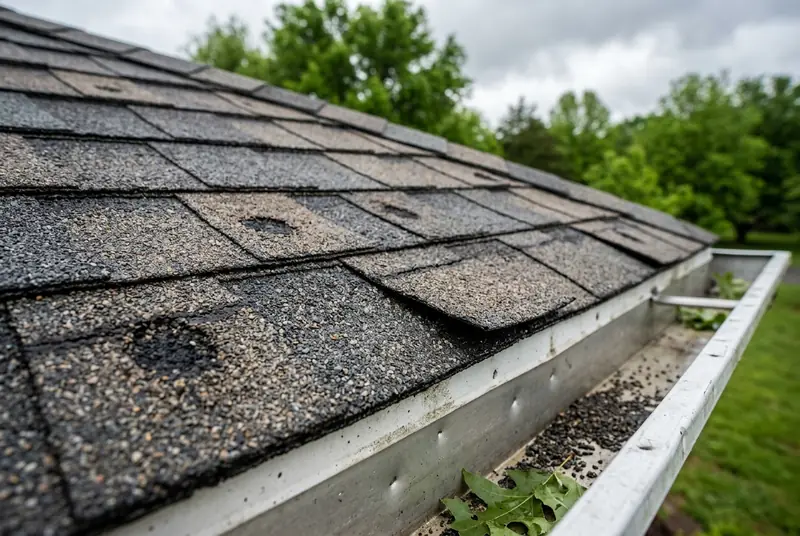
Following severe spring hail or wind storms, check downspout elbow bends for lodged tree twigs or shingle granule sludge that restricts water discharge.
Gutter Cleaning Frequency vs. Tree Canopy Density Matrix
Determine your home's exact maintenance requirement based on property vegetation:
| Property Canopy Environment | Recommended Annual Cleanings | Peak Maintenance Months | Key Risk Factor |
|---|---|---|---|
| Open Suburban Lot (<2 Trees) | 1 to 2 Times Annually | Late Spring & Late Autumn | Wind-blown pollen, shingle granule silt |
| Moderate Canopy (Mature Street Trees) | 2 to 3 Times Annually | June, October, December | Oak catkins, maple seed pods, autumn leaves |
| Dense Woods / Waterfront (Hendersonville) | 3 to 4 Times Annually | May, July, October, December | Heavy organic leaf mats, pine needles, damp rot |
| Pine / Evergreen Proximity | 3 Times Annually | Spring, Late Summer, Autumn | Acidic pine needles slip past standard gutter screens |
Gutter Sizing: Upgrading from 5-Inch to 6-Inch Seamless Gutters
Many homes in Sumner County suffer from overflowing gutters even when they are completely clean. The cause is hydraulic undersizing:
Standard 5-inch K-style gutters hold approximately 1.2 gallons of water per linear foot, with small 2x3-inch downspouts that quickly back up during torrential Middle Tennessee downpours. Upgrading to 6-inch seamless aluminum gutters increases water capacity by over 40% (holding 2.0 gallons per foot), and pairs with oversized 3x4-inch downspouts that easily flush seed pods and small twigs without clogging.
Do Gutter Guards Eliminate the Need for Cleaning?
Micro-mesh stainless steel gutter guards dramatically reduce gutter cleaning frequency, stopping large leaves and oak tassels while allowing rainwater to enter. However, no gutter guard is 100% maintenance-free:
Fine pollen silt, pine needles, and roof shingle granules can settle on top of mesh screens over several years, requiring periodic brushing or gentle hose flushing to maintain surface tension and water flow.
Mature Tree Canopy Debris Cycles & Fascia Rot Prevention
The deciduous oak, hickory, and sweetgum canopies dominant across Sumner County dictate specific gutter maintenance timelines to prevent costly structural roof and foundation damage:
- Spring Oak Catkin & Seed Tassel Drop (April to May): Stringy oak catkins and maple helicopter seeds quickly form dense, felted mats over gutter outlets, causing downspout blockages during early summer cloudbursts.
- Autumn Hardwood Leaf Drop (Late October through December): Full canopy defoliation requires at least two cleanouts—one midway through November and a final clearing in late December once high oak canopies have completely dropped foliage.
- Preventing Hydrostatic Fascia Decay: When blocked gutters fill with standing stormwater, water backs up underneath the lower shingle drip edge, saturating untreated wooden sub-fascia boards and inviting wood-boring insects.
- Downspout Extension Clearance: Ensure downspout kickouts discharge water at least 5 to 6 feet away from residential foundations, preventing saturated clay soil from inducing foundation settling and structural truss shifting.
Frequently Asked Questions About Gutter Maintenance
Yes. When water cannot flow down the downspout, it fills the gutter trough and rises. The standing water wicks upward under the metal drip edge and lower shingle courses via capillary action, rotting the plywood decking edges and soaking interior ceiling drywall along exterior walls.
Seasonal gutter care to clear debris buildup and professional gutter cleaning typically ranges from $125 to $225 for a standard single-story home, and $175 to $350 for a two-story or steep-slope multi-gabled home, including clearing downspouts and removing all debris from the property.
Downspout extensions or underground drain pipes should discharge water at least 5 to 6 feet away from the home's foundation wall, directing runoff onto a positive ground slope that drains away from the structure to prevent foundation cracking and basement dampness.
Next Steps & Related Roofing Guides
Related Sumner County Roofing Guides: Continue reading Spring Roof Maintenance Checklist for Sumner County Homes and How Often Should You Inspect Your Roof in Tennessee?.