Dark or light shingles for a Tennessee roof? Learn how color affects attic heat compared with ventilation, then choose wisely. Get advice: (615) 647-8320.
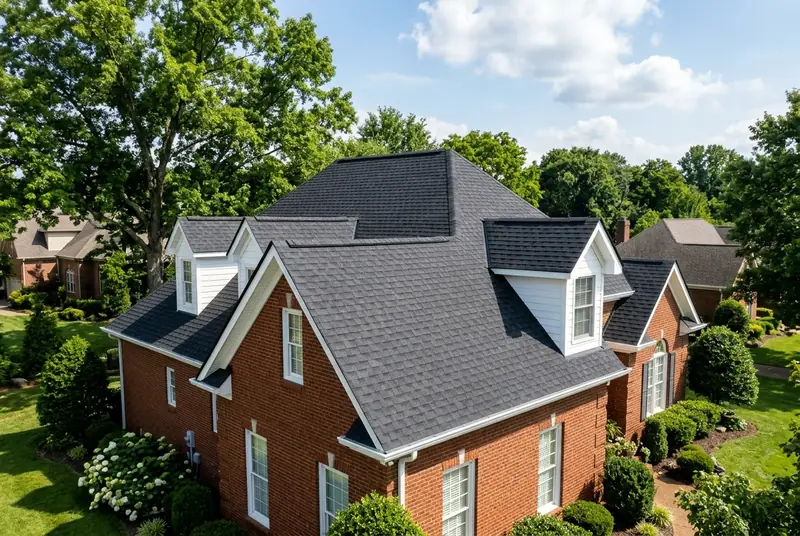
Shingle color affects exterior rooftop surface temperatures by 10°F to 15°F, with black and dark charcoal shingles reaching 160°F to 165°F during peak Middle Tennessee summer heat while light gray and beige shingles reach 145°F to 150°F. However, when it comes to interior attic temperatures and household air conditioning utility bills, shingle color is far less significant than balanced attic ventilation (IRC Section R906) and adequate ceiling insulation (R-38 to R-49). An attic with proper continuous ridge and soffit ventilation will stay within 15°F to 20°F of outdoor ambient temperature, regardless of whether the shingles are black or white.
Thermal Surface Physics: How Shingle Pigment Absorbs Solar Energy
Solar radiation striking an asphalt roof consists of ultraviolet light, visible light, and near-infrared heat rays. Standard dark asphalt shingles absorb approximately 85% to 90% of solar radiation, converting radiant photons into conductive heat energy:
Lighter shingle granules — such as shades of light gray, mist white, or pale tan — incorporate reflective mineral coatings that reflect a higher percentage of visible solar light, resulting in a modest 10°F to 15°F surface temperature reduction compared to black shingles on a sunny 95°F Middle Tennessee summer afternoon.
However, once solar heat conducts through the asphalt shingle, synthetic underlayment, and 7/16-inch OSB or plywood roof sheathing, thermal performance is dictated almost entirely by two mechanical factors: attic airflow and thermal barrier insulation.
The True Culprit of Blistering Attics: Inadequate Ventilation
If your attic reaches an unbearable 140°F to 155°F in July, changing from dark shingles to light shingles will not solve the problem. The true culprit is inadequate passive or active attic ventilation:
- 01
The Natural Convection Stack Effect
As air warms beneath the roof deck, it expands and rises toward the highest point of the roof. Effective attic ventilation relies on the "stack effect": cool ambient outdoor air must be pulled in through continuous perforated soffit vents along the eaves, while superheated air exhausts freely through continuous ridge vents along the roof peaks.
- 02
The IRC 1:150 vs. 1:300 Ventilation Rule
Under the adopted International Residential Code (IRC Section R906), residential attics require a minimum net free ventilating area (NFVA) of 1 square foot of ventilation for every 150 square feet of attic floor space (or 1:300 if a balanced 50/50 ratio of intake soffit and exhaust ridge vents is maintained).
- 03
Blocked Soffit Baffles: The Hidden Failure
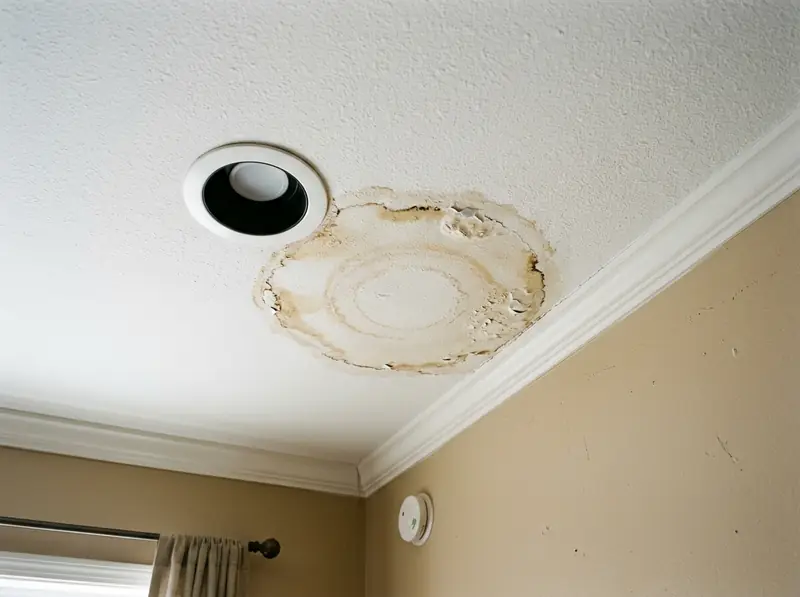
In many Sumner County subdivisions built during the 1990s and 2000s, blown-in fiberglass or cellulose insulation was installed directly over eave soffit openings without installing plastic or foam rafter baffles (accu-vents). When soffit intake vents are choked with insulation, the ridge vent cannot exhaust hot air, trapping an oven of stagnant heat in the attic.
Comparison Matrix: Shingle Color vs. Ventilation Performance
The table below contrasts how shingle color and ventilation engineering interact to determine actual attic and living space temperatures on a typical sunny 95°F Middle Tennessee summer afternoon:
| Shingle Color & Ventilation Configuration | Peak Roof Surface Temp | Peak Attic Air Temp | Living Room Ceiling Heat Transfer | Shingle Lifespan Impact |
|---|---|---|---|---|
| Black Shingles + Balanced Ridge/Soffit Vent Continuous airflow + R-38 insulation | 165°F | 110°F – 115°F | Minimal heat transfer to living space | Normal 20 – 25 Year Lifespan |
| Light Gray Shingles + Balanced Ridge/Soffit Vent Continuous airflow + R-38 insulation | 150°F | 105°F – 110°F | Minimal heat transfer to living space | Normal 22 – 25 Year Lifespan |
| Black Shingles + Blocked / Inadequate Vents Trapped heat + compressed insulation | 170°F | 145°F – 155°F | High heat radiates down into bedrooms | Premature curling; bakes shingle in 12–15 Yrs |
| Light Gray Shingles + Blocked / Inadequate Vents Trapped heat + compressed insulation | 155°F | 140°F – 148°F | High heat radiates down into bedrooms | Premature shingle embrittlement |
What About "Cool Roof" Shingles for Residential Homes?
For homeowners committed to maximizing solar reflectance without sacrificing architectural aesthetics, manufacturers now produce specialized "Cool Roof" shingles (such as GAF Timberline HDZ with solar-reflective granules or Owens Corning Duration Cool):
These shingles utilize specialized ceramic-coated mineral granules that reflect near-infrared light — the invisible wavelength that carries over 50% of solar heat — while maintaining rich, dark visual colors like Charcoal and Weathered Wood. These products allow homeowners to satisfy neighborhood HOA covenants requiring traditional dark color palettes while achieving higher solar reflectance ratings.
Aesthetic Harmony & HOA Compliance in Sumner County
When selecting shingle color, neighborhood context and architectural harmony should be your primary guide. In master-planned developments across Hendersonville, Gallatin, White House, and Goodlettsville, Homeowners Association (HOA) architectural review boards maintain strict pre-approved color palettes:
Installing an unapproved bright white or stark light gray shingle on a brick or stone two-story home can trigger HOA compliance violations and create jarring visual contrast. Deep dimensional tones (such as Pewter Gray, Weathered Wood, Moire Black, or Driftwood) complement standard Middle Tennessee brick, stone, and siding finishes while delivering optimal curb appeal.
Insulation R-Value vs. Solar Heat Transfer Dynamics
While shingle surface temperature garners significant attention, building scientists emphasize the dominant role of ceiling insulation in preventing heat transfer into living spaces:
- Code-Mandated R-38 to R-49 Ceiling Insulation: Under adopted energy codes across Middle Tennessee, residential attics should maintain a minimum thermal resistance of R-38 (approximately 12 to 14 inches of blown-in fiberglass or cellulose). A properly insulated ceiling prevents 115°F attic heat from penetrating down through drywall into second-story bedrooms.
- Radiant Barrier Sheathing Considerations: Installing roof decking with a factory-laminated reflective foil radiant barrier reflects up to 97% of radiant heat back toward the roof, lowering attic temperatures by an additional 15°F to 20°F regardless of shingle pigment.
- Whole-House Fan & Ductwork Insulation: Air conditioning supply ducts running through unconditioned attics should feature R-8 insulation sleeves to prevent thermal loss as cooled air travels to living areas.
- Professional Energy Audits: Licensed roofing professionals inspect attic insulation depth, baffle alignment, and duct sealing during comprehensive roof replacements to deliver optimal household thermal comfort.
Frequently Asked Questions About Shingle Color and Heat
No. Research by the Department of Energy shows that on homes with proper attic ventilation and code-compliant ceiling insulation (R-38 to R-49), switching from dark shingles to light shingles impacts total household cooling costs by less than 2% to 4% per year.
Only if the attic is poorly ventilated. In an unventilated attic, dark shingles absorb heat that cannot escape, accelerating the evaporation of volatile asphalt oils and causing premature embrittlement. In an attic with balanced ridge-and-soffit ventilation, dark shingles achieve their full 20-to-25-year service life.
Yes. Airborne algae streaks (Gloeocapsa magma) are dark black. Light gray, beige, and white shingles display dark algae streaking much more prominently than darker charcoal or weathered wood tones. Ensure any light-colored shingle you choose features copper-infused algae-resistant granule technology.
Next Steps & Related Roofing Guides
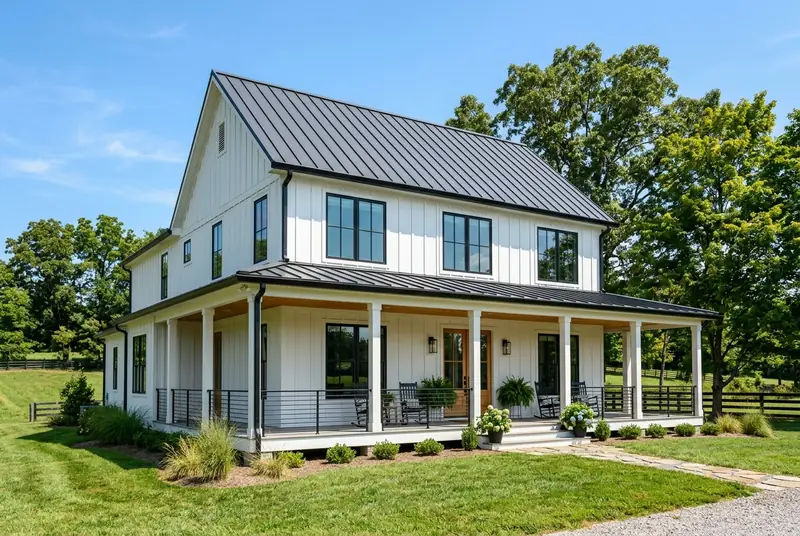
Related Sumner County Roofing Guides: Continue reading Architectural vs. 3-Tab Shingles: Is the Upgrade Worth It? and Standing Seam vs. Corrugated Metal Roofing in Tennessee.