Active Ceiling Water Leak Diagnosis: Tracing Attic Travel & Roof Entry
When water stains appear on drywall or drops begin falling into living spaces, the ceiling mark is almost never directly beneath the roof breach. Water follows rafters, trusses, wiring, and vapor barriers before pooling and penetrating drywall. Here is how professional roofers isolate the true origin and stop catastrophic ceiling collapses.
Average horizontal distance between drywall drip and actual roof penetration point.
Cracked rubber plumbing collars account for over 50% of sudden non-storm roof leaks in Sumner County.
Window before waterlogged gypsum ceiling boards lose structural fastener grip and collapse.
Puncturing the center of a ceiling blister relieves weight and directs water into a bucket.
- The Offset Principle: Surface tension and gravity pull rainwater down the underside of roof rafters or truss chords. Water travels horizontally along wood framing or drywall tape seams until it hits an obstruction or low point before soaking through ceiling drywall.
- Differential Triage: Water dripping exclusively during or directly after rainfall indicates an exterior roof envelope breach. Water dripping on 90°F sunny afternoons points to a clogged attic HVAC evaporator drain pan. Continuous unceasing flow indicates pressurized plumbing.
- Immediate Homeowner Action: Never let water pool above drywall. Relieve hydrostatic weight by placing a bucket beneath the bulge and puncturing a single 1/4-inch weep hole in the center with a screwdriver to channel drainage and prevent broad ceiling tear-out.
- Repair vs Replacement: Localized penetration failures (pipe boots, step flashing, single wind-torn shingles) can usually be rebuilt cleanly for $250–$650. Saturated, delaminating plywood decking requires partial sheet replacement at $65–$95 per sheet.
Why Ceiling Water Stains Lie: How Water Travels Through the Attic Assembly
One of the most frustrating aspects of diagnosing a ceiling leak is that looking directly above the interior stain rarely reveals a hole in the roof. Water behaves predictably according to surface tension, capillary action, and slope gravity.
When rainwater breaches the outer roofing layer — whether through a cracked rubber plumbing collar, a popped roofing nail, or deteriorated chimney counter-flashing — it encounters the water-shedding underlayment. In aging roofs with degraded asphalt felt, water penetrates beneath the paper onto the 7/16-inch OSB or 1/2-inch CDX plywood roof decking.
Once moisture finds a decking seam, it does not immediately drip into the living room. Instead, it clings to the underside of the decking or follows the descending slope of a dimensional lumber rafter or manufactured truss chord. Water will travel downward along wood framing for 5, 10, or even 15 feet until it hits a joist intersection, electrical wiring conduit, or ceiling framing tie-plate.
From that framing junction, moisture drops onto attic insulation (blown fiberglass or cellulose). Fiberglass insulation acts like a giant sponge, holding quarts of water without showing visible signs on the ceiling below. Only after the insulation reaches complete hydraulic saturation does moisture contact the upper surface of 1/2-inch gypsum drywall.
The 4 Stages of Ceiling Drywall Failure
- Initial Discoloration: Light tan or faint yellow circle. Moisture has reached the paper backing of the drywall. Evaporation still equals seepage rate.
- Brown Ring Formation: Concentric brown mineral rings develop. Tannins and fire-retardant salts in the drywall paper leach to the surface as repeated wetting-drying cycles occur.
- Bulging / Sagging Blister: Gypsum core dissolves and turns into wet chalk. Structural cohesion is lost, and the drywall sags under insulation weight.
- Catastrophic Rupture: Fastener drywall screws pull through the softened gypsum core, leading to sudden multi-sheet ceiling collapse and floor flooding.
Differential Diagnosis: Is It a Roof Leak, HVAC Overflow, or Plumbing?
Before climbing onto shingles or calling a roofing crew, homeowners must verify that the water is actually coming from the building envelope. In Middle Tennessee homes, attic HVAC air handlers and upper-floor plumbing lines produce identical ceiling stains.
Exterior Roof Leak
Water enters through compromised flashings, pipe boots, shingles, or valleys during atmospheric precipitation.
- Rain Timing: Drip starts 15–60 minutes into rainfall or during intense wind-driven downpours.
- Dry Weather: Drip stops completely within 12–24 hours after rain ends.
- Attic Inspection: Water stains visible on underside of OSB decking or running down rafters.
Attic A/C Overflow
Air handlers installed in hot unconditioned attics produce gallons of condensate daily that overflow clogged drain lines.
- Weather Timing: Occurs on bright, sunny 90°F+ afternoons when A/C runs continuously with zero rain.
- Stain Location: Located directly underneath or within 6 feet of the attic HVAC unit or duct run.
- Drain Pan Check: Secondary metal emergency pan under the attic unit is standing full of water.
Pressurized Pipe Leak
Pressurized supply copper/PEX lines or second-story bathroom waste drain lines leak independent of weather conditions.
- Flow Pattern: Constant, steady rhythm that continues unabated during sunny, clear weather.
- Fixture Correlation: Drips intensify immediately after an upstairs toilet flushes, shower runs, or tub drains.
- Water Meter Check: Spinning flow indicator on municipal water meter while all interior faucets are closed.
Water Actively Dripping from Your Ceiling Right Now?
Relieve hydrostatic pressure with a small weep hole into a bucket, then call our Sumner County dispatch line for rapid triage coordination tarping.
The 6 Most Common Roof Entry Culprits in Sumner County
When rainfall correlates directly with ceiling drips, inspection begins at the roof's natural weak points. Over 90% of roof leaks originate at flashings and penetrations, not in the center of an open shingle field.
 01
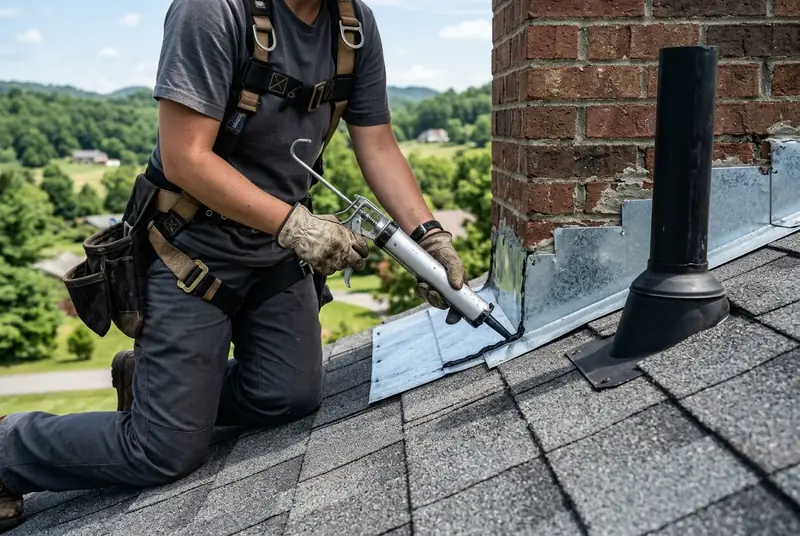
Cracked Pipe Boot Collar
Plumbing vent stacks penetrate the roof to vent sewer gasses. Standard neoprene rubber boot collars bake in Middle Tennessee UV heat and dry rot within 7–10 years, splitting along the pipe collar seam.
02Step & Counter Flashing Gaps
Where roof planes terminate against brick chimneys, dormers, or vertical siding, L-shaped step metal overlaps each shingle course. Dried mortar caulk or rusted metal allows water to bypass behind the siding.
03Valley Debris Damming
Valleys carry high-volume water runoff. Fallen leaves and pine needles from mature Sumner County oak trees trap silt, forcing backed-up water laterally beneath shingle edges beyond the ice & water shield barrier.
04Missing or Rusted Chimney Cricket
International Residential Code requires chimneys over 30 inches wide to have a saddle/cricket to divert water around the back. Flat rear chimney walls without crickets collect standing water that rots backer boards.
 05
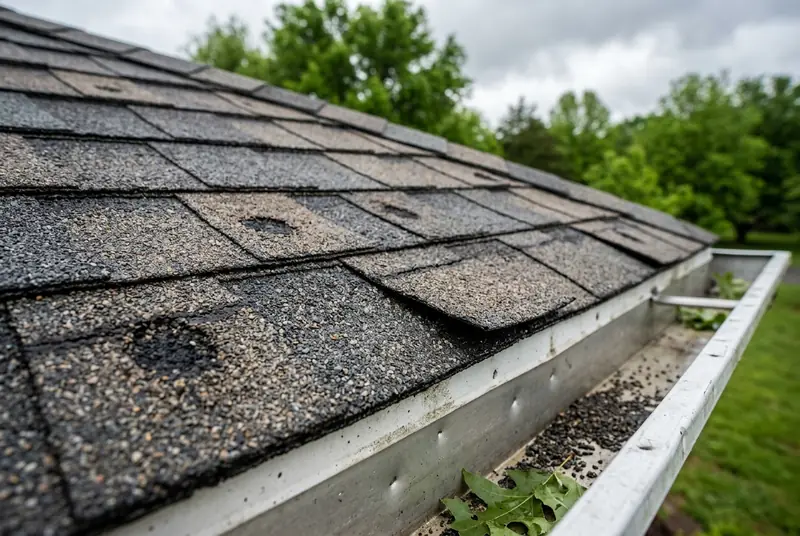
Torn Shingles & Sealant Failures
Middle Tennessee straight-line storm winds break the thermal adhesive sealant strip bonding shingle tabs together. Once lifted or creased, wind-driven rain easily forces water under the tab onto nail penetrations.
06Popped Roofing Nails & Fasteners
Repeated seasonal expansion of wooden roof rafters pushes improperly seated framing nails outward. The nail head pushes up through the overlying shingle, creating an unsealed hole directly into the wood decking.
How to Safely Inspect the Attic & Contain Active Ceiling Water
Tracing a roof leak safely requires entering the attic during daylight hours or during active rainfall. Follow these professional containment steps to preserve your ceiling and prevent catastrophic floor damage.
Position Catchment
Move high-value furniture, rugs, and electronics immediately. Place a wide plastic bucket or deep storage tote centered directly beneath the damp spot or drip path on the floor.
Puncture Weep Hole
Locate the lowest point or center of the water bulge. Press a screwdriver or 1/4-inch drill bit into the center. This releases trapped water into your bucket and prevents lateral drywall spreading.
Step Only on Joists
Never step onto drywall or insulation in the attic. Only place your feet on solid dimensional joists or walking boards. Falling through ceiling drywall is the #1 residential attic inspection hazard.
Trace Up the Rafter
In the dark attic with a flashlight, look for wet wood sheen or black mildew stains on the underside of roof decking. Follow the wet rafter upward toward the ridge until you locate the daylight entry point.
Critical Electrical Safety Warning
If water is dripping through or pooling inside an electrical light fixture, ceiling fan canopy, or electrical outlet box, do not touch the fixture or flip the light switch. Immediately switch off the breaker controlling that circuit at your main electrical panel before containing the water.
Unsure Where the Leak Originates?
Vetted Sumner County crew leads use infrared moisture meters and attic rafter tracing to locate the exact penetration point without invasive damage.
Cost Benchmarks: Isolated Repair vs. Decking Replacement
Most ceiling leaks do not require an entire roof replacement. If caught early before decking wood rots, targeted flashing or penetration rebuilds restore complete watertight integrity at a fraction of the cost.
| Repair Scenario & Severity | Components Replaced / Addressed | Typical Cost Range | Timeline & Urgency |
|---|---|---|---|
| Neoprene Pipe Boot Replacement Localized rubber collar degradation with zero wood rot. | New heavy-duty silicone/aluminum boot collar, surrounding shingles unlaced, ice & water barrier taped. | $250 – $450 | 1–2 Hours |
| Step / Chimney Flashing Rebuild Dormer sidewall or chimney leak with intact wood decking. | Custom-bent aluminum step flashing, mortar reglet joint cut, counter-flashing resealed, ice barrier applied. | $450 – $950 | Half Day |
| Rotted Wood Decking Sheathing Chronic hidden leak causing delaminated or soft OSB/plywood. | Full 4x8 sheet CDX plywood or OSB replacement, rafter sistering if compromised, ice barrier, matching shingles. | $65 – $95 / sheet + $400–$800 labor/shingle tie-in | Same Day |
| Valley Metal Cleanout & Relining Dammed valley water forcing past shingle edges. | Removal of 2 courses along valley, installation of heavy-gauge W-valley metal & full Ice & Water Shield membrane. | $650 – $1,400 | 4–6 Hours |
| Systemic Aging / Widespread Leaks Multiple failure points on a 18–25+ year old architectural roof. | Complete tear-off, full synthetic underlayment, new flashings throughout, limited-lifetime architectural shingles. | $450 – $650 / square $9,000–$16,500 typical home | 1–2 Days |
Will Homeowners Insurance Cover an Active Ceiling Leak?
Coverage depends strictly on whether the underlying cause was sudden and accidental (such as a severe windstorm blowing off shingles or hail puncturing a vent cap) versus gradual maintenance wear. Insurance carriers routinely deny claims for dried pipe boots, rusted flashing, or slow long-term roof rot. However, interior water damage resulting from a sudden storm event is generally covered under standard RCV policies after your deductible.
Do You Need to Replace the Entire Ceiling Drywall?
If addressed within 24–48 hours and dried thoroughly with industrial dehumidifiers, drywall with light staining can often be treated with an oil-based stain-blocking primer (like Kilz) and repainted. However, if the drywall has sagged more than 1/4 inch, feels soft and chalky to the touch, or harbors black mold colonization on the paper backing, the damaged section must be cleanly cut out back to the nearest ceiling joists and replaced.
Frequently Asked Questions About Ceiling Water Leaks
Answers to common questions Sumner County homeowners have when dealing with active water leaks and ceiling moisture.
Straight-down rain sheds cleanly across overlapping shingles by gravity. However, when strong Middle Tennessee thunderstorm winds blow rain horizontally, water is forced upward underneath unsealed shingle tabs, behind siding J-channels, and into box vent louvers. This symptom typically indicates compromised shingle sealant strips or missing step flashing counter-kickouts rather than an open hole in your decking.
In Middle Tennessee's humid climate, mold spores (including Aspergillus and Stachybotrys) germinate on cellulose drywall paper and damp wood framing within 24 to 48 hours of continuous moisture contact. That is why professional extraction, attic ventilation drying, and removing wet cellulose insulation within the first two days is critical to avoid expensive mold remediation.
Surface caulking and bucket roof mastic are temporary emergency patches that usually fail within 30–90 days. In hot summer weather, black roofing mastic bakes, shrinks, and cracks, trapping water underneath it against the wood decking. Proper repair requires mechanical replacement: pulling damaged shingles, installing self-adhering ice and water membrane, and nailing in new flashing metal.
Winter ceiling leaks that occur on cold, sunny mornings when it hasn't rained in days are almost always caused by attic condensation. When warm, moist air from bathrooms and living spaces leaks into an under-ventilated attic, moisture condenses as frost on cold roof nails and decking. Once the morning sun warms the roof, the frost melts simultaneously across the entire attic plane, mimicking an active roof leak.
Standard latex ceiling paint will not hide a water stain — the water-soluble tannins in the drywall paper will bleed straight through multiple coats of latex paint within weeks. You must verify the drywall is completely dry (less than 15% moisture content on a meter), apply an oil-based stain-blocking primer or shellac-based primer, and then apply color-matched ceiling latex paint.
We coordinate fast storm dispatch with independent roofing crews throughout Sumner County — including Hendersonville, Gallatin, White House, and Goodlettsville. For active water penetrations, partner crews provide prompt emergency tarping and diagnostic inspection to secure your roof envelope before permanent repairs begin.
Request an Attic & Roof Leak Inspection
Have an active ceiling drip or suspicious moisture stain in Sumner County? Enter your details below for a fast diagnostic response or immediate phone dispatch.
Zero pressure. Same-day emergency dry-in dispatch available across Sumner County.