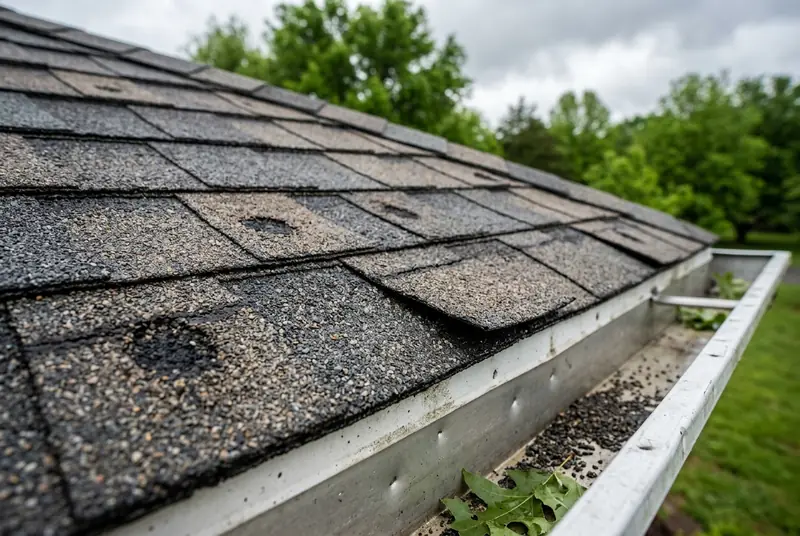
Hail peaks March through June in Middle Tennessee. Learn when your roof is most exposed and what to check after storms. Book an inspection: (615) 647-8320.
Tennessee hail season peaks during the spring months of March, April, and May, with a secondary atmospheric risk window occurring in late autumn from October through mid-November. In Sumner County, the geographic intersection of cold air masses descending from the Highland Rim and warm, moisture-laden air rising from the Cumberland River basin creates intense convective supercell thunderstorms capable of producing destructive 1.0-inch to 2.25-inch hail. Understanding seasonal storm patterns allows property owners to schedule preventative inspections and respond rapidly following storm events.
Atmospheric Mechanics: Why Middle Tennessee Experiences Severe Hail
Middle Tennessee sits directly within "Dixie Alley," a geographic region characterized by frequent severe convective weather. The formation of large, damaging hailstones requires three critical atmospheric conditions that converge across Sumner County each spring:
- 01
High Convective Available Potential Energy (CAPE)
Intense ground heating during early spring afternoons draws warm, humid air north from the Gulf of Mexico, creating extreme thermal buoyancy that fuels towering thunderstorm updrafts.
- 02
Highland Rim Elevation & Strong Vertical Wind Shear
As storm fronts advance eastward across the elevated Highland Rim plateau (800+ ft elevation in northern White House and Portland), abrupt changes in wind speed and direction with height organize storms into rotating supercells with powerful, sustained updraft plumes exceeding 80 to 100 mph.
- 03
Sub-Freezing Mid-Level Atmospheric Layers
Suspended by violent updrafts, water droplets freeze into ice pellets, recirculating through supercooled cloud layers and accumulating concentric layers of ice until their weight overcomes the updraft, sending hailstones hurtling toward residential rooftops at terminal velocities up to 70 to 90 mph.
- 04
Old Hickory Lake Microclimate Convergence
In Hendersonville and southern Gallatin, the broad thermal expanse of Old Hickory Lake acts as a localized moisture engine, frequently intensifying convective squall lines as they cross the lake shoreline.
Sumner County Hail Risk Calendar & Seasonal Vulnerability
Review the seasonal severe weather calendar below to understand peak storm risk periods across Middle Tennessee:
| Seasonal Window | Primary Atmospheric Driver | Average Hail Size Range | Roof Vulnerability Level | Recommended Homeowner Action |
|---|---|---|---|---|
| Early Spring (March – April) | Clashing cold Canadian fronts with warm Gulf air | 1.00" – 2.25"+ (Quarter to Baseball) | Critical / Maximum Risk | Pre-season roof audit; clear gutters and valleys |
| Late Spring (May – Early June) | High solar heating and afternoon convective squalls | 0.75" – 1.75" (Dime to Golf Ball) | High Risk | Post-storm ground collateral inspections |
| Mid-Summer (July – August) | Pop-up pulse thunderstorms and intense heat | 0.50" – 1.00" (Pea to Quarter) | Moderate Risk | Attic ventilation check; thermal baking mitigation |
| Late Autumn (October – Mid-Nov) | Secondary severe front transitions before winter | 0.75" – 1.50" (Penny to Ping Pong) | Moderate to High Risk | Pre-winter inspection; clean leaves from gutters |
| Winter (December – February) | Freezing rain, sleet, and occasional snow squalls | Sleet pellets (<0.25", non-damaging) | Low Hail / High Freeze-Thaw | Inspect valley ice and water shield performance |
How Hailstone Kinetics Damage Asphalt Shingles
Hail damage is extraordinarily insidious because individual hail strikes rarely puncture an asphalt shingle entirely on the day of the storm. Instead, kinetic impact from 1-inch or larger hailstones crushes the mineral granule armor and micro-fractures the underlying fiberglass mat:
Once protective ceramic-coated granules are dislodged, the raw asphalt bitumen is exposed directly to Middle Tennessee's intense summer sun. Ultraviolet radiation bakes the exposed oils, causing the bitumen to dry out and crack within 6 to 12 months. When winter arrives, moisture enters these micro-fissures and freezes, expanding the cracks into open penetration points that produce active ceiling leaks well after the storm occurred.
Tennessee Statutory Deductible Mandates
Following major Middle Tennessee hail swaths, traveling contractors canvas residential neighborhoods offering to "waive" or "absorb" homeowner deductibles. Homeowners must understand that under Tennessee law, it is strictly illegal for a roofing contractor to pay, waive, rebate, or absorb any portion of an insurance deductible.
Contractors promising to cover deductibles must artificially inflate invoices, commit insurance fraud under Tennessee statutes, or cut construction corners by omitting mandatory code items like perimeter drip edge (IRC R905.2.8.5). Property owners are legally required to fund their policy deductible directly to the licensed contractor.
Highland Rim vs. Old Hickory Lake Geographic Hail Dynamics
Sumner County encompasses two distinct geographic zones that exhibit differing hail risk characteristics:
- Highland Rim Elevation Corridor (Portland & White House): Sitting at 800 to 900+ feet elevation near the Kentucky border, northern Sumner County encounters higher wind shear and colder mid-level temperatures. Supercell thunderstorms crossing the ridge frequently produce dense swathes of 1.25-inch to 2.0-inch hard hail that causes severe impact fractures on roofing surfaces.
- Cumberland River & Old Hickory Lake Basin (Hendersonville & Gallatin): At lower valley elevations, storms crossing the water draw high moisture vapor that can suddenly fuel downdraft microbursts. Hail in this zone is often accompanied by violent 60+ mph straight-line winds that peel unsealed shingle tabs along windward eaves.
- Post-Storm Drone Inspections: Utilizing high-resolution aerial drone photography allows technicians to safely inspect steep gables and lake-facing slopes, capturing high-definition evidence without risking falls on slick shingle granules.
Frequently Asked Questions About Tennessee Hail Season
For standard architectural shingles, hailstones measuring 1.0 inch (quarter-sized) or larger typically possess sufficient kinetic mass and terminal velocity to fracture the fiberglass matting. On older, brittle 3-tab shingles, hailstones as small as 0.75 inches can dislodge granules and break aged asphalt binders.
Hail swath mapping utilizes National Weather Service dual-polarization Doppler radar data to track the precise geographic path, width, and hailstone diameter of storm supercells. Insurance adjusters and contractors use certified meteorological hail reports to corroborate physical roof damage with a specific date of loss.
Class 4 shingles (tested under UL 2218) withstand 2-inch steel ball impacts without cracking the asphalt mat, providing superior protection against standard Middle Tennessee hail. However, catastrophic baseball-sized hail (2.5"+) can damage even Class 4 shingles. Insurance premium discounts for Class 4 shingles are carrier- and policy-specific, subject to individual underwriting guidelines, and not guaranteed.
Next Steps & Related Roofing Guides
Related Sumner County Roofing Guides: Continue reading How to Document Roof Storm Damage for an Insurance Claim and Can Insurance Drop You for a Roof Claim in Tennessee?.