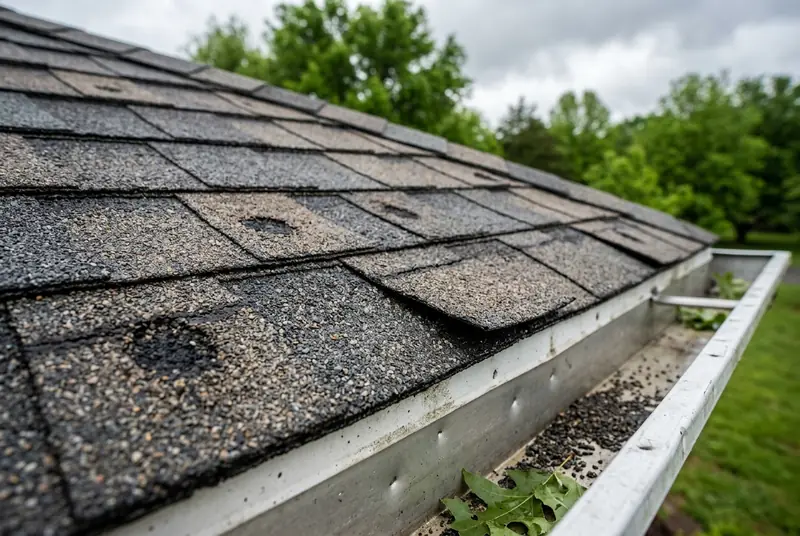
Hail just pounded your roof? Stay safe, photograph the damage and schedule an inspection before filing a claim. Need a roofer? Call (615) 647-8320 today.
Immediately after a severe hailstorm hits your Sumner County home, prioritize physical safety by remaining indoors until the squall line fully clears. Once safe, document the exact date and storm time, inspect ground-level collateral damage (such as dented gutters, damaged window screens, and bruised air conditioning condenser fins), and check your attic and ceilings for active water intrusion. Contact an established, licensed local roofing contractor for a professional roof audit before opening an insurance claim, avoiding premature claim filings if damage is below your policy deductible.
The 4-Step Immediate Storm Response Protocol
Following intense spring or summer supercells across Hendersonville, Gallatin, White House, Goodlettsville, or Portland, homeowners should follow a structured four-stage evaluation:
- 01
Stay Grounded: Never Climb a Wet Roof
Wet asphalt shingles and storm-damaged roof planes are extraordinarily slick. Stepping on bruised shingles dislodges loosened granules, exacerbates water entry points, and creates severe fall hazards. Perform initial inspections exclusively from the ground using binoculars or high-resolution smartphone cameras.
- 02
Inspect Ground-Level Soft Metal Collateral
Insurance adjusters look for collateral evidence to substantiate hail size and trajectory. Inspect aluminum downspouts, mailboxes, painted wooden decks, outdoor grill covers, and aluminum window sashes for fresh circular denting and paint chips.
- 03
Perform an Interior Attic & Ceiling Sweep
Take a high-powered flashlight into your attic to inspect the underside of plywood or OSB roof decking for active dripping, damp insulation, or water tracking along rafters. Place buckets beneath leaks and take time-stamped photos of any interior water penetration.
- 04
Schedule an Independent Contractor Inspection
Before contacting your insurance carrier, have a trusted local roofing contractor perform an on-roof photographic assessment. A reputable roofer confirms whether physical hail strikes fractured the shingle fiberglass mat and advises whether filing a claim is financially justified.
Taking prompt, documented action after a severe hail event preserves your insurance rights, prevents secondary water damage to interior ceilings, and ensures your Sumner County home receives a complete, code-compliant restoration from a reputable local roofing contractor.
Hailstone Diameter vs. Probable Roof & Property Damage Matrix
The physical damage inflicted on residential roofing materials correlates directly with hailstone diameter, fall velocity, and storm wind speed:
| Hail Diameter Reference | Approximate Velocity | Probable Shingle Damage | Collateral Indicators |
|---|---|---|---|
| 0.75 Inch (Pea to Dime) | 35 – 40 mph | Minimal damage to sound architectural shingles; granule loss on aged 3-tabs | Splatter marks on oxidized gutters, minor foliage loss |
| 1.00 Inch (Quarter Size) | 45 – 50 mph | Threshold size for insurance claims; localized bruises on fiberglass mat | Dents on aluminum ridge vents, soft metal gutters, and AC units |
| 1.50 Inch (Ping Pong Ball) | 55 – 65 mph | Widespread mat fractures, punctured valley metal, fractured ridge caps | Deep denting on garage doors, cracked vinyl siding, broken vinyl louvers |
| 1.75 to 2.00+ Inches (Golf Ball+) | 70 – 85+ mph | Severe catastrophic shingle perforation, broken skylights, decking damage | Shattered windshields, destroyed gutters, punctured metal roofs |
Why You Should Avoid Door-to-Door Storm Chasers
Within 24 to 48 hours of a confirmed Sumner County hail swath, out-of-state "storm chasing" crews flood local neighborhoods, placing door hangers and offering "free roof replacements." Protect your property and legal standing by recognizing warning signs:
Unlicensed crews often use high-pressure tactics, asking homeowners to sign an immediate "Assignment of Benefits" (AOB) or "Direction to Pay" agreement. Furthermore, these crews frequently offer to "waive" or "absorb" your insurance deductible.
Under Tennessee state law, it is strictly illegal for a contractor to pay, rebate, waive, or absorb a homeowner's insurance deductible. Contractors promising to cover deductibles must artificially inflate invoices, commit insurance fraud under Tennessee law, or use substandard materials that void manufacturer warranties.
Sumner County Severe Storm Convergence & Hail Dynamics
Sumner County sits directly within Middle Tennessee's active severe weather corridor. During spring and early summer, convective cold fronts crossing the Highland Rim encounter warm, moist air rising from the Cumberland River basin and Old Hickory Lake. This atmospheric convergence produces localized supercell thunderstorms capable of generating intense straight-line wind shear and severe hail swaths spanning from Hendersonville through Gallatin and north to Portland.
Hail damage is extraordinarily insidious because individual hail strikes rarely cause immediate leaks on the day of the storm. Instead, kinetic impact from 1-inch to 2-inch hailstones crushes the mineral granule armor and fractures the underlying fiberglass mat. Over subsequent months, intense ultraviolet solar radiation bakes the exposed bitumen, causing micro-fissures that expand during winter freeze-thaw cycles and eventually produce active interior water leaks well after the storm event.
Post-Storm Emergency Checklist for Sumner County Homeowners
Keep this structured action checklist handy following any severe thunderstorm or hail event across Middle Tennessee:
- Take Time-Stamped Photographs: Capture clear photos of hailstones next to a ruler or coin, as well as damaged patio furniture, window screens, and dented downspouts.
- Inspect the Electrical Service Mast: Check where overhead electrical power lines connect to your roof; if falling tree branches damaged the weatherhead or conduit, call your electric utility immediately.
- Check Attic Insulation for Dampness: High winds can force rain through ridge vents and box vents without puncturing shingles; inspect insulation directly beneath roof vents.
- Demand Proof of Tennessee Contractor Licensure: When contacting roofers, verify their active BC or BC-A license status on verify.tn.gov and refuse any solicitor offering to pay your insurance deductible.
Frequently Asked Questions About Hailstorm Response
Most homeowner insurance policies require claims to be reported within one year (365 days) from the documented storm date. We recommend scheduling an inspection within 30 to 60 days of the storm to ensure evidence is documented before natural weathering obscures hail impact craters.
Hail damage rarely creates immediate leaks. Instead, hail impacts bruise the asphalt matrix and dislodge protective mineral granules. Over the next 6 to 18 months, sun exposure and freeze-thaw cycles break down the exposed asphalt mat, eventually causing leaks well after the claim filing deadline has passed.
Yes. Standard homeowner insurance policies require policyholders to mitigate further loss. Reasonable expenses incurred for professional emergency tarping and board-up services to prevent water damage are typically covered under the claim's dwelling coverage.
Next Steps & Related Roofing Guides
Related Sumner County Roofing Guides: Continue reading Can Insurance Drop You for a Roof Claim in Tennessee? and Public Adjuster vs. Insurance Adjuster for a Roof Claim.